

Living Out Loud: The Inspiration Behind “In Living Color”
Guest blogger Michael T. Kuester
After graduating from college, I moved in with a friend just off the campus where we’d both been students. It was a nice place, especially for two bachelors in their twenties just starting out. But that wasn’t important. What was important was the sense of connection. I really enjoyed being a college student. Fresh out of school, most of the students were still around my age. It felt good to know that college life was still going. I liked walking around on Friday and Saturday nights and hearing the laughter. As the years wore on, however, my attitude toward the weekend bustle changed. Going out on weekend nights lost its appeal. And as it did, I stopped finding the sounds of life in a college neighborhood pleasant, and began to find them annoying.
Through advancing my life and growing up, I’d fallen into the same trap so many mature adults fall into: generational misunderstanding. All my hard work and growth had led to an undeserved sense of superiority. When I won Writers of the Future last year, I hadn’t planned to do so with a story about generational misunderstanding. But as I always say, when you’re a writer, sooner or later, you end up on the page. And as a writer, writing is how I make sense of the world around me.
Thus, arguably the most unique story I’ve ever written ended up being a surprisingly personal story about the world we live in.
The Age of Maturity vs. Generational Misunderstanding
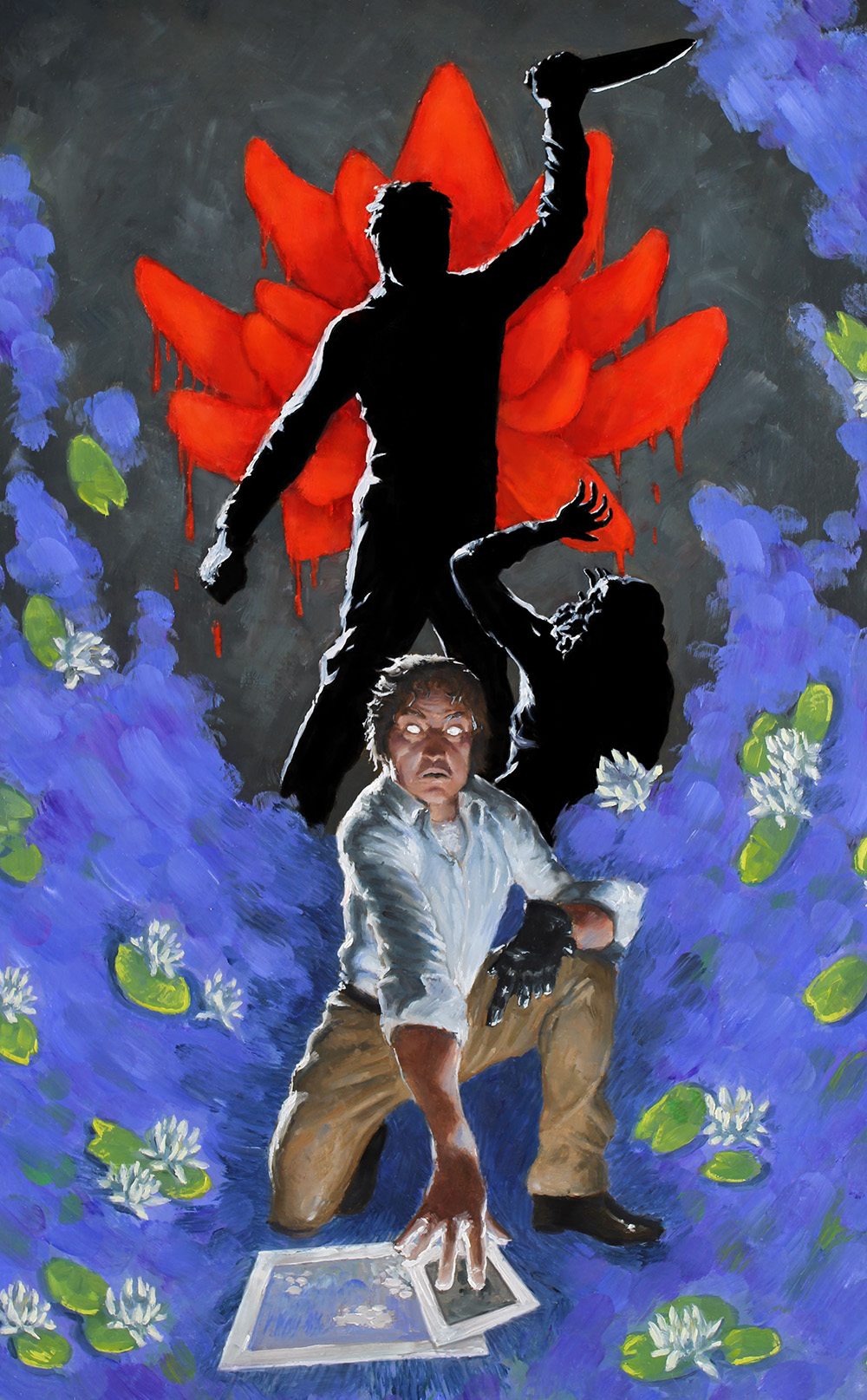
“In Living Color” illustrated by Nathan Deiwert
One of the biggest causes of generational misunderstanding is our society’s stubborn insistence on establishing an arbitrary age of maturity. Once you turn eighteen, we like to think, you’re an adult. Once you’re twenty-five, you’re a fully mature human. Your brain decides I’m done! and suddenly you can navigate every situation with the poise and skill gleaned from a lifetime of learned experience.
The truth, like so many things in both science and life, is more complicated. Research papers, like this one from the U.S. National Library of Medicine, show that the human brain doesn’t fully mature until as late as age thirty. Furthermore, not everyone’s brain matures at the same rate. So yeah, some twenty-five-year-old adults may have fully developed brains. But others don’t. And to anyone whose twenties are a chapter that’s been read and closed, that makes a lot of sense.
The antagonist in my winning story, “In Living Color,” isn’t just a telepathic serial killer; he’s what happens when an unbalanced individual keeps hearing “Kids these days…” and decides to act on it. He begins stalking and killing young women because their thoughts are too loud. Because they live their lives out loud, and so he takes those lives from them, in a misguided quest for peace and quiet he can never achieve.
Alone in a Crowd: Exploring Urban Loneliness
I was seldom truly alone as a young adult, but looking back at that period in my life, I see a lot of loneliness. When you’re in your twenties and early thirties in an urban area, you spend a lot of your time outside your home. Chances are you live alone, in an apartment the size of a cheaply furnished matchbox. In his book Triumph of the City, economist Edward Glaeser held this up as one of the greatest strengths of urban centers: the combination of cramped, isolated living conditions and a vibrant nightlife encourages ambitious young adults to gather in public spaces, where they participate in an exchange of ideas that spurs innovation.
That all sounds great to an accomplished economist, but to a young adult in a big city it’s hard to salve the sense of loneliness by focusing on how your desperation for human interaction is contributing to society. In retrospect, I realized the protagonist of “In Living Color” was informed by my experience living as a young professional in a major metropolitan area. August’s abilities make it uncomfortable for him to be around others, but humans are social creatures. And I don’t think it would take more than a casual read to realize he’s not happy.
When Extraordinary Abilities Become a Curse
In the story, August’s abilities mark him as a member of a small minority known as Talents: individuals born with various extrasensory abilities. These abilities range from telepathy to enhanced tactile sensing to precognition. To many readers, this probably sounds cool. How many among us have never thought it would be great to read minds or predict the future?
But while August’s abilities give him superhuman insights into the world and people around him, they also make him miserable. Think about it: do you really want to know exactly what others are thinking about you? If you could predict the future and saw, say, your own death in a car crash, would you be happy to know it was coming if you couldn’t stop it?
Why Modern Sci-Fi Writing Demands Radical Empathy
I often describe modern writing as an exercise in radical empathy. To write the kind of literature modern readers demand, you have to be capable of getting into your characters’ heads and digging around in there. You have to figure out how a person you created thinks and feels. How can you do that if you don’t even stop to wonder how actual people around you think and feel?
Over the past year and a half as I’ve fully dedicated myself to writing, I’ve found myself growing more empathetic. I don’t get angry when people cut in front of me in supermarket aisles, or when pedestrians walk in front of my car. Or when I hear a group of teenagers or twenty-somethings laughing and yelling in public. Because rather than just thinking Sheesh, what a jerk, I find myself wondering what their lives are like. What they’re going through right now.
It’s worth remembering that Carl Sagan used the last line of his famous “Pale Blue Dot” speech to encourage us to deal more kindly with one another. Doctor Sagan was a credit to our species, and he never lost sight of the simple fact that we all have our struggles.
Thank you for reading. If you’re interested in reading my first-place story “In Living Color,” make sure you pick up L. Ron Hubbard’s Writers of the Future Volume 42. And sign up for the Galaxy Press newsletter for more thoughts from the many wonderful authors in this anthology.
 Michael T. Kuester is an engineer by day, science fiction writer by night. An avid hiker and cooking enthusiast, Michael is a passionately curious individual, and lives his life by the motto “In the twenty-first century, there’s no excuse for an unanswered question”. Over the years he’s devoted free time to researching everything from the history of naval warfare to the origins of potato chips.
Michael resides in Cincinnati, Ohio, with his partner Jen, their two children, and their freeloader housemate Eddie the Cat. His work will be appearing soon in Analog Science Fiction and Fact, but Writers of the Future Volume 42 marks his professional debut.
For news about Michael’s work, visit http://michaeltkuester.com, or follow him on Twitter (X), @MichaelTKuester
Other articles and resources you may be interested in:
Exploring Digital Personhood and the Ethics of Cyberpunk Existence
 © by the Estate of Edd Cartier/Dean and Kenn Cartier
Leave a Reply
Want to join the discussion?Feel free to contribute!