
Ole Doc Methuselah at 80: Space Medicine and the Humanitarian Frontier
Guest blogger Dr. Lee Carroll (AKA EL Whitehorse)
A Very Short Story: “The Call”
Mission Medical Officer Sarah Whitfield tightened her boots and stared at the alert blinking on her wrist display. Crew member down. Section 4-B. Respiratory distress. Cause unknown.
She was 240,000 miles from the nearest hospital.
Earth communications carried a 1.3-second delay each way at lunar distance. Houston could weigh in eventually, but eventually was not a clinical timeline. The patient was hers. The diagnosis was hers. The treatment was hers. If she got it wrong, no second opinion was coming in time to matter.
She grabbed her bag and ran.
In another time, another genre, that scene would belong to a country doctor on horseback or a battlefield medic in a forward aid station. As NASA prepares for the next phase of crewed lunar exploration, it belongs to a new kind of professional that does not have a settled name yet. NASA calls them Crew Medical Officers. The job description is still being written. But the shape of the role, the doctor who is also the diagnostician, also the surgeon, also the pharmacist, also the only one on the scene, is already familiar to anyone who read a particular pulp magazine 80 years ago.
Meet the Original Space Doctor
In October 1947, Astounding Science Fiction published a novelette called “Ole Doc Methuselah.” The byline read René Lafayette. The author was L. Ron Hubbard, using a pen name because his own three-part serial was running in the same issue and editor John Campbell did not want one writer dominating the magazine.
The Lafayette story took first place in the reader poll that month. Hubbard’s own byline came in second. He had beaten himself.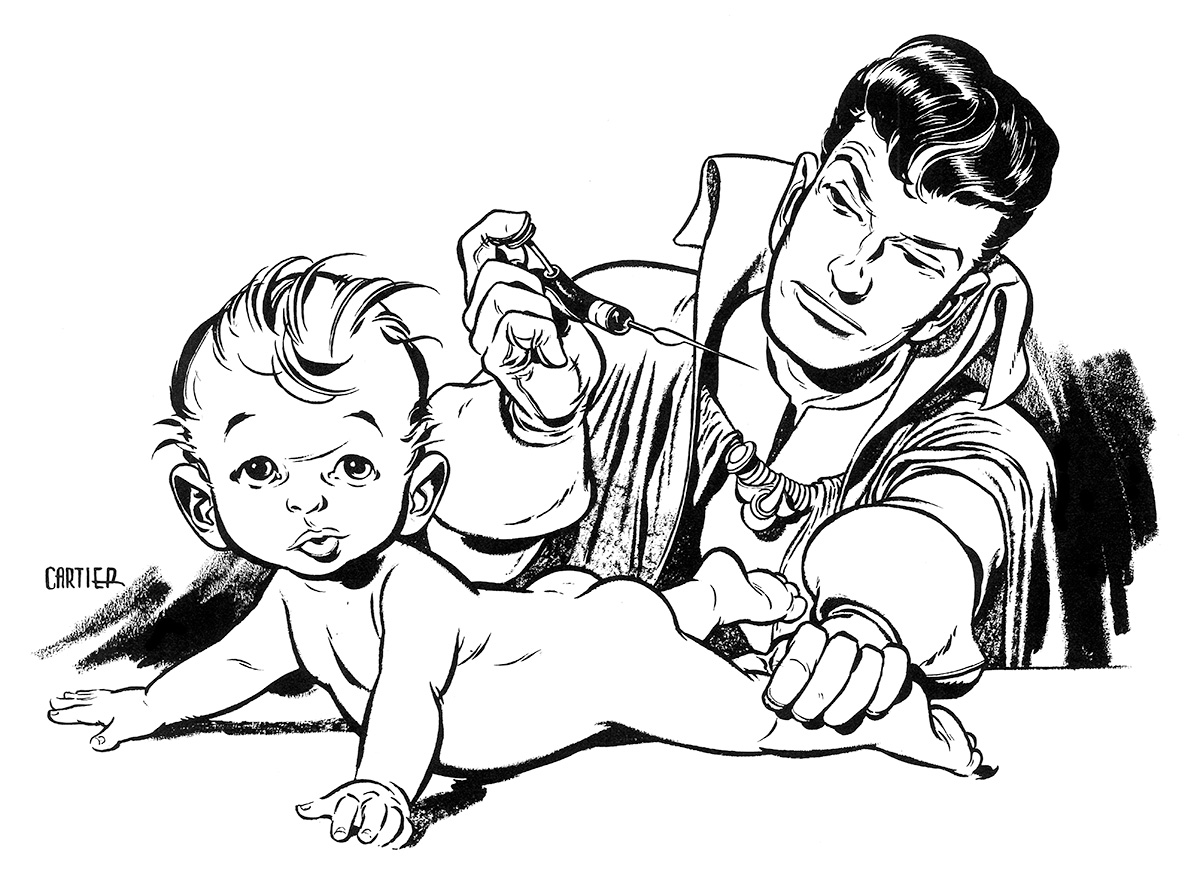
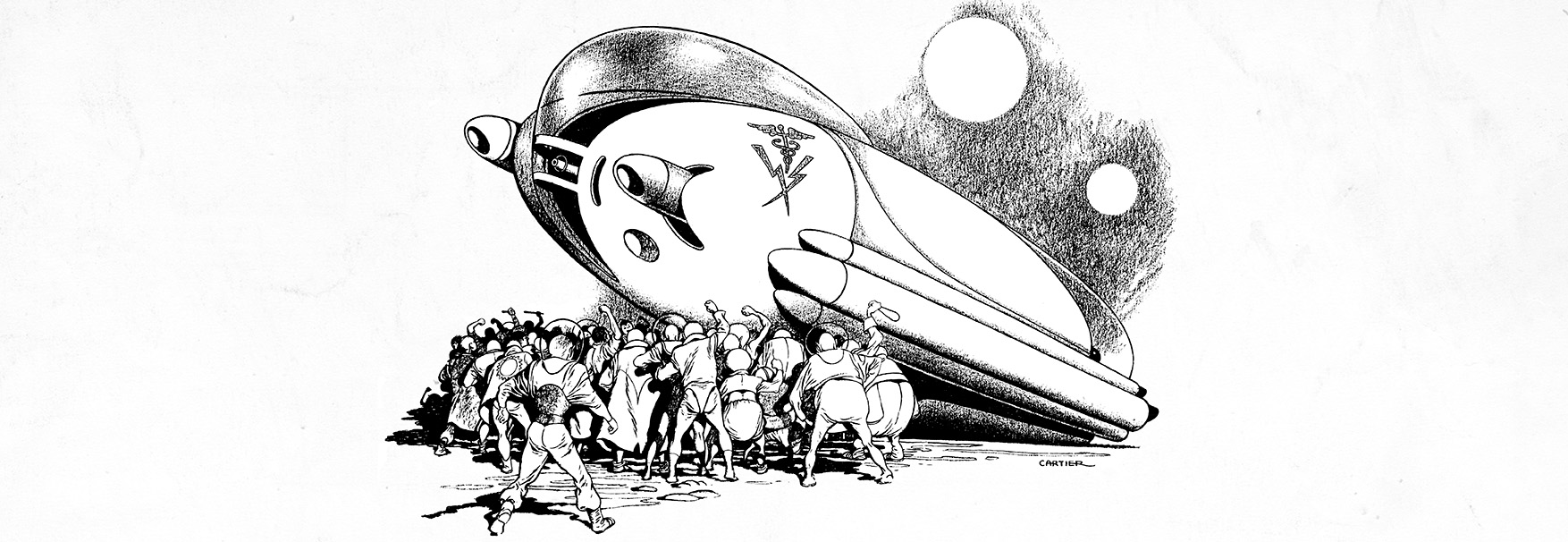
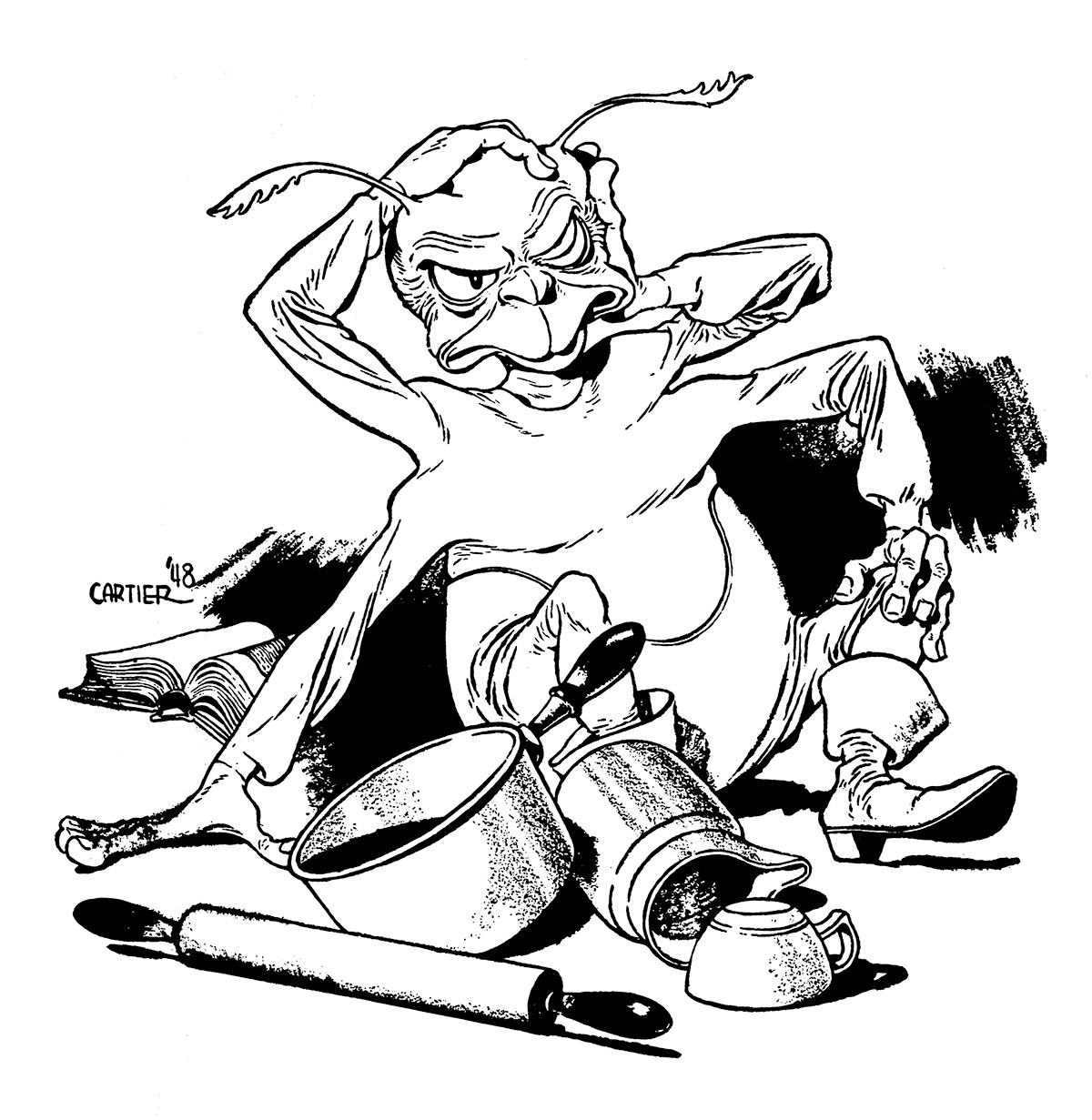
The hero of that story was a centuries-old physician named Ole Doc Methuselah, member number 77 of an elite corps of 600 doctors called the Soldiers of Light. He rode a starship named Morgue. His companion was a four-armed alien named Hippocrates who ate gypsum and remembered everything Ole Doc ever read. His weapons were a scalpel, a hypodermic, and a brain that could diagnose a planet as readily as a patient.
 Eighty years later, that character looks less like pulp fantasy and more like a job description.
Hubbard grounded Ole Doc in real medical history, not just future fantasy. In “The Great Air Monopoly” (1948), he gives us Ole Doc’s full credentials and address: “the eight hundred and eighty years since he had graduated from Johns Hopkins medical school in Baltimore, Maryland, First Continental District, Earth, Orbit Three, Sun1, Rim Zone, Galaxy1, Universe.” The joke is the cosmic specificity. The point is that Hubbard’s space doctor learned medicine at a real hospital, on a real planet, in a real city. The character is an extension of terrestrial medicine, not a replacement for it.
What Hubbard Saw Coming
The Soldiers of Light, as Hubbard sketched them, operate under principles that would not be formally organized on Earth until 1971, when a group of French doctors and journalists founded Médecins Sans Frontières (Doctors Without Borders). The MSF charter rests on four pillars: medical ethics, independence, impartiality and neutrality, and bearing witness. Hubbard built essentially the same scaffolding into his fictional corps 24 years earlier.
The Soldiers go where the trouble is. They answer to no government. They make medical decisions based on need rather than politics. They reserve the right to act without permission when life is at stake. Their allegiance is not to a nation, a ruler, or a political cause, but to the preservation of life itself. That is MSF, projected outward to a galactic scale, written before MSF’s founders were old enough to drive.
The prescience is not magic. Hubbard was writing in 1947, two years after Hiroshima and Nagasaki, two years after the United Nations was chartered, one year before the World Health Organization launched. The idea that medicine might transcend national borders was already in the air. Hubbard simply asked what that idea would look like once humanity transcended planetary borders.
His answer turned out to be remarkably useful.
The Modern Echo
NASA’s Human Research Program runs an Earth-based facility called HERA, short for Human Exploration Research Analog, at Johnson Space Center in Houston. It is a 650-square-foot habitat where volunteer crews live in isolation for 45 days at a time, simulating the psychological conditions of long-duration spaceflight. The findings are not gentle. A separate 520-day Mars-mission simulation in Moscow found one of six crew members reporting depressive symptoms in 93 percent of mission weeks. Two crew members accounted for 85 percent of all perceived interpersonal conflicts. Sleep degraded. Cognitive performance dropped.
That is six people in a sealed habitat with regular communication home. Now imagine Mars, where the round-trip signal delay can stretch to 44 minutes. Imagine a crew with no possibility of evacuation. Imagine a medical emergency where the doctor is one of six and the diagnosis is happening alone.
Hubbard imagined it. The stories collected under the title Ole Doc Methuselah run through plague outbreaks, an interstellar pandemic, surgical intervention in zero gravity, the birth of human babies under non-standard conditions, the development of vaccines against alien viruses, and the management of crews driven sideways by months of isolation. Each story is a thought experiment about what happens when medicine has to work far from home.
Some of the medical and logistical challenges discussed by NASA today resemble situations Hubbard wrote fiction stories about decades ago.
When Ole Doc shows up on a planet in crisis, Hubbard makes the authority instantly visible. In “Plague!” (1949), a dispatcher comes racing on a scooter to challenge the unauthorized landing and sees “the crossed ray rods. They were on the nose of the golden ship and they meant something. The same insignia was on the gorget at Ole Doc’s throat. The ray rods of pharmacy. The ray rods of the Universal Medical Society which, above all others, ruled the universe of medicine, said what it pleased, did what it pleased when it pleased and if it pleased. It owed allegiance to no government because it had been born to take the deadly secrets of medicine out of the hands of governments. The dispatcher shut his mouth.”
That insignia, a fictional symbol of medical authority that transcended politics, anticipates the actual badges and protocols modern aerospace medicine is now constructing. NASA’s flight surgeons, in a real medical emergency on a Mars transit, will need exactly that kind of recognized, unquestioned authority.
The Ethical Question Nobody Wants to Touch
Here is the part that gets uncomfortable.
When Ole Doc quarantines a planet to stop a land-fraud conspiracy, he is exercising medical authority over a population that never asked for him. The drama works because readers trust him. He is the good guy. But the structural question of what gives a physician final authority in a place with no government to override him is a real question that real space-medical planning is now confronting.
Who consents to treatment when a crew member is unconscious and Earth communication is delayed by 22 minutes? Who decides when a condition jeopardizes a mission that took decades to build? What happens to medical confidentiality on a six-person crew where everyone shares the same air? How does an end-of-life conversation work when the patient is on Mars and the family is on Earth?
The 1967 Outer Space Treaty obligates spacefaring nations to avoid contaminating other worlds and to protect Earth from extraterrestrial material. NASA’s Office of Planetary Protection sorts missions into categories by biological risk. The handling of a returned Mars sample, if one ever makes it back, will require Biosafety Level 4 facilities that do not currently exist for that purpose.
Ole Doc’s charter and the Outer Space Treaty are not the same document. But they are answering the same question. Someone has to have authority. Someone has to be answerable to ethics rather than expedience. Someone has to be ready to say no when the situation calls for it.
Hubbard even put the legal scaffolding directly into the text. In “Ole Mother Methuselah” (1950), Hippocrates the alien recites verbatim from the Universal Medical Society’s code: “Article 726 of Code 2, paragraph 80, third from the top of page 607 of the Law Regulating the Behavior of Members of the Universal Medical Society, to wit: ‘It shall also be unlawful for the Soldier of Light to desert a medical task of which he has been apprised when it threatens the majority of the human population of any planet.’” That is fictional bureaucracy at its most fun, a page citation for a galactic medical law, but the principle is real. The obligation to act, codified in writing, when the stakes are population-level. NASA has not yet written Article 726. The Mars era is going to require something like it.
The Twin Milestone
As NASA prepares for humanity’s first return to crewed lunar exploration since Apollo 17, another milestone approaches: 2027 marks 80 years since Ole Doc Methuselah first appeared in the pages of Astounding Science Fiction. Two milestones bracketing the same conversation.
The 1947 event imagined what interstellar medicine might require. The 2027 event begins the hardware-level work of building it. The questions are continuous. The fiction was just early.
That is what good speculative fiction does. It is not prediction in the fortune-teller sense. It is permission. Hubbard gave four generations of readers permission to take seriously the idea that medicine would be central to whatever humans built among the stars. NASA, ESA (the European Space Agency), JAXA (Japan), and every other space agency are now building it.
The Doctor’s Bag, Repacked
Sarah Whitfield, the fictional medical officer in our opening, will have tools Ole Doc did not. AI-assisted diagnostics. Telemedicine support with seconds of delay rather than weeks. Automated psychotherapy systems now in research at multiple institutions. A pharmacopoeia adapted for the chemistry of microgravity. A surgical bay designed for the realities of zero-G blood flow.
But the core of the job is the same one Ole Doc carried into his ship in 1947. Show up. Diagnose what you find. Treat what you can. Hold the line on ethics when nobody is watching. Be ready for biology that does not match the textbook.
Hubbard’s hero approaches all of this with the rationalist’s posture. In “Her Majesty’s Aberration” (1948), the narrator notes that “somewhere near the beginning” of his eight-century career, Ole Doc “had jettisoned most superstition.” That mindset, evidence-based, curious, unintimidated by the unfamiliar, is exactly the temperament aerospace medical planners are now looking for in the first generation of long-duration mission medical officers.
The Soldiers of Light were Hubbard’s answer to a question that had not been asked yet: what kind of person does humanity need when it leaves home? Eighty years later, the answer is being road-tested in real time.
Time to read the manual.
Get Ole Doc Methuselah here.
Bibliography
Basner, M., Dinges, D. F., Mollicone, D., Savelev, I., Ecker, A. J., Di Antonio, A., Jones, C. W., Hyder, E. C., Kan, K., Morukov, B. V., & Sutton, J. P. (2014). Psychological and behavioral changes during confinement in a 520-day simulated interplanetary mission to Mars. PLOS ONE, 9(3), e93298.
Galaxy Press. (n.d.). Ole Doc Methuselah. https://galaxypress.com/l-ron-hubbard-bestselling-novels/ole-doc-methuselah/
Hubbard, L. R. [as René Lafayette]. (1947, October). Ole Doc Methuselah. Astounding Science Fiction, 40(2).
Hubbard, L. R. [as René Lafayette]. (1948, March). Her Majesty’s Aberration. Astounding Science Fiction.
Hubbard, L. R. [as René Lafayette]. (1948, September). The Great Air Monopoly. Astounding Science Fiction.
Hubbard, L. R. [as René Lafayette]. (1949, April). Plague! Astounding Science Fiction.
Hubbard, L. R. [as René Lafayette]. (1950, January). Ole Mother Methuselah. Astounding Science Fiction.
Médecins Sans Frontières. (n.d.). Our charter and principles. https://www.msf.org/about-msf
NASA. (2024). Hazard: Isolation and confinement. NASA Human Research Program. https://www.nasa.gov/hrp/hazard-isolation-and-confinement/
NASA. (2026). Moon to Mars: Artemis program overview. https://www.nasa.gov/humans-in-space/artemis/
NASA Office of Planetary Protection. (2024). Mission implementation. Jet Propulsion Laboratory. https://planetaryprotection.jpl.nasa.gov/mission-implementation
Pagnini, F. (2024). Supporting the mind in space: Psychological tools for long-duration missions. JMIR Formative Research, 8, e66626.
Patel, Z. S., Brunstetter, T. J., Tarver, W. J., Whelan, A. M., Krieger, S. S., & Huff, J. L. (2020). Red risks for a journey to the red planet: The highest priority human health risks for a mission to Mars. npj Microgravity, 6(1), 33.
United Nations Office for Outer Space Affairs. (1967). Treaty on principles governing the activities of states in the exploration and use of outer space, including the Moon and other celestial bodies. United Nations.

Dr. Lee Carroll (AKA EL Whitehorse)
Working abroad in 10 countries of Europe, Asia, Africa, North and South America, both as a doctor and teacher, has shown me life through a prism of viewpoints. That experience has enriched my writing to the point where I enjoy showcasing the admiration I feel for varied cultures.
For example, my WOTF Semi-finalist entry is published for Kindle as Death Clearinghouse: The Novelette, featuring Apache ingenuity. Coming soon is my next sci-fi series Coko: An Android’s Heartfire Awakening.
When I’m not writing, I’m yanking swords out of stones around the world.
Amazon author page: https://www.amazon.com/stores/author/B07TRC1F4V/about
Other articles and resources you may be interested in:
Ole Doc Methuselah: A Larger Than Life Hero In A Universe of Adventure
The Prime Directive: Ole Doc Methuselah Vs Captain Kirk of Star Trek
Weird and Bizarre Earth Practices as Seen through Alien Eyes


Leave a Reply
Want to join the discussion?Feel free to contribute!