
The Enduring Psychological Horror of Fear by L. Ron Hubbard: A Review
Guest blogger Mark Watson
The Story Behind Fear
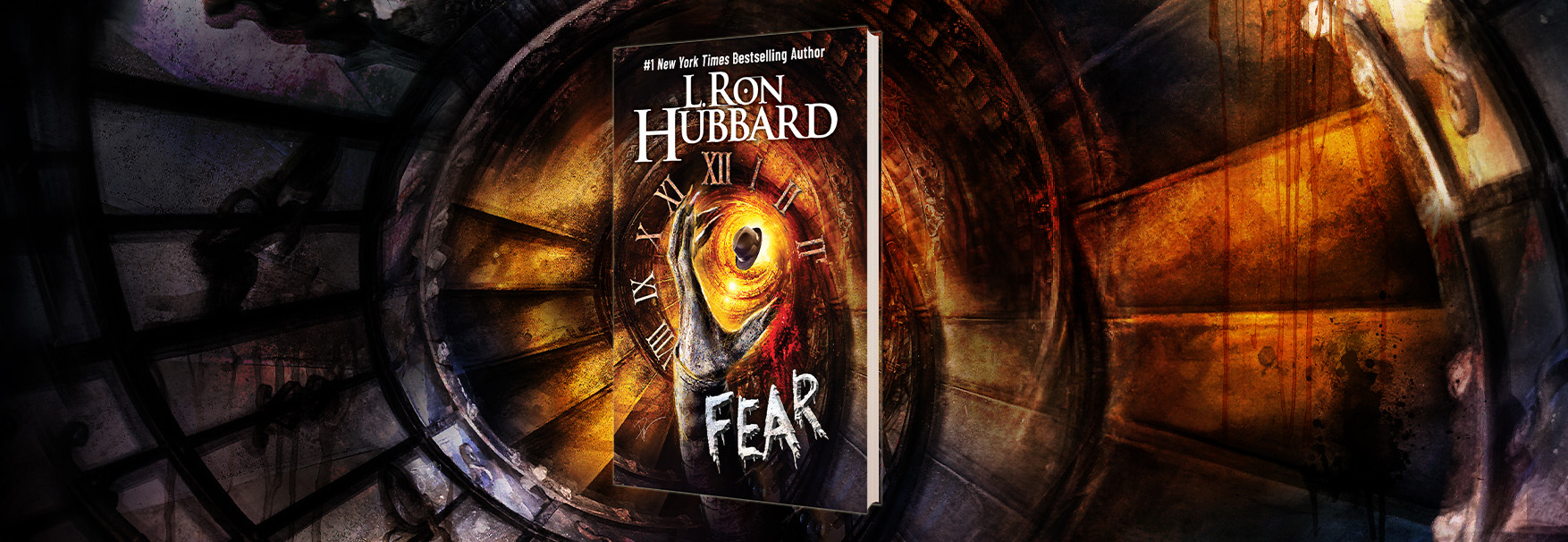
Fear by L. Ron Hubbard is a great book, not just good, but great. Fear is one of his smaller, lesser-known, but highly regarded works, especially among fellow authors, many of whom consider it a “perfect” tale of suspense. The book is incredibly fast-paced, and most readers, myself included, finish it in one sitting. In fact, the only downside is that many readers find themselves hurrying through the final one or two chapters in their eagerness to find the resolution.
The book opens with its protagonist, James Lowry, a college professor and rationalist who has written a controversial article dismissing the existence of demons and the supernatural. What follows is a deeply unsettling descent into paranoia and confusion when Lowry loses four hours of his life, completely and inexplicably gone from his memory, along with his hat. His attempts to retrace those missing hours drag him through a waking nightmare in which the boundary between reality and madness becomes increasingly difficult to discern.
Among the story’s most memorable and disquieting passages is a sequence in which Lowry descends a staircase that seems to have no end, each step drawing him deeper into darkness, the bottom perpetually out of reach. It’s the kind of image that lodges itself in the mind long after the final page, a perfect encapsulation of the novel’s central horror: that the ground beneath our certainties can simply fall away. Is he losing his mind, or are darker, more sinister forces at work? Hubbard masterfully keeps the reader, and Lowry himself, guessing at every turn, building dread not through cheap shocks but through a suffocating sense that something is profoundly, irreparably wrong with the world around him.
Hitchcockian Suspense and Psychological Horror
When reading it, I couldn’t help feeling that Fear is the sort of book that, had it ever been adapted for the screen, would’ve been the perfect vehicle for Alfred Hitchcock. It shares that same distinctive Hitchcock quality of placing an ordinary man in an increasingly extraordinary and terrifying situation; think James Stewart’s tortured obsession in Vertigo, or Cary Grant’s hapless everyman pursued across a continent in North by Northwest. Like those films, Fear doesn’t rely on monsters or gore to unsettle its audience. Instead, it burrows under the skin through atmosphere, psychological tension, and a creeping sense that reality itself can’t be trusted. Hubbard, like Hitchcock, understood that true fear isn’t what we see, but what we can’t quite see: the thing lurking just at the edge of comprehension.
The comparison doesn’t end with Hitchcock. Readers of Shirley Jackson will recognise a similar architecture of dread, that same slow unravelling of a protagonist’s grip on the world around them that Jackson perfected in The Haunting of Hill House. Fans of early Stephen King, particularly The Shining, will also find familiar ground here, though it’s worth noting that Fear predates King’s work by decades.
Why Fear Still Works Today
The novel’s central mystery is so utterly gripping that you find yourself racing through the final pages, desperate to discover what became of those lost hours and that missing hat. But to call this a flaw would be to misunderstand it entirely. It’s the hallmark of masterful storytelling and a concept so compelling that the questions it raises simply demand to be answered. The mark of a great page-turner isn’t that you want to slow down, but that you can’t.
All in all, Fear stands as one of the genuine greats of the genre, a genuinely haunting novella that’ll stay with you long after the final page. It’s no surprise that so many authors reach for it when asked about the books that influenced them most. It remains one of the genre’s most enduring psychological horror novellas.
Mark Watson is the author of eight horror thriller books, including Crybaby: A Gripping Thriller of Survival and Vengeance, Return to Innsmouth, The First Mann on Mars and the Creepypasta Collection, in addition to many bestselling, multi-award-winning children’s books, The Shark in the Park, The Travelling Circus and the bestselling Bull Terrier book, Milo & Ze. In addition to writing, he enjoys playing Arc Raiders. Mark is originally from Burnley, Lancashire in the UK but now lives in Spain.
Website: https://markwatsonbooks.com/
Other articles and resources you may be interested in:
Fear by L. Ron Hubbard: A Classic Psychological Horror
10 Great Horror Books to Read This Halloween
The Making of Fear—a Horror Book


Leave a Reply
Want to join the discussion?Feel free to contribute!