
When Is a Dragon Just a Dragon?
Guest blogger Joseph Sidari
Imported from France in 1992, shackled “for safety,” and displayed for tourists, Ash lives most of his life behind bars in the Bronx Zoo. Stephanie Burnham meets him as a child, grows up alongside him, and becomes an idealistic journalist who spends decades trying to give him back what was taken: his freedom.
To the authorities, Ash is an asset. To the public, he is a curiosity. To Steph, he is a friend. Which raises the central question of the story—and of fantasy more broadly: Is Ash just a dragon? Or, like so many of literature’s most memorable dragons, is he something more?
To answer that, it helps to look at how dragons function across modern fantasy.
Smaug, the Dragon of Greed
(The Hobbit, The Lord of the Rings, J. R. R. Tolkien)
Tolkien’s Smaug is the template for the modern Western dragon: vast, intelligent, and sitting atop a mountain of stolen gold. Smaug embodies wealth, arrogance, and corruption. He is what happens when desire becomes absolute. So in Tolkien’s works, Smaug is not “just a dragon.” He is greed with wings.

Drogon, the Dragon of Power
(A Song of Ice and Fire, George R. R. Martin)
In George R. R. Martin’s world, dragons are political instruments. Daenerys’s dragons are living weapons—symbols of legitimacy, conquest, and terror. They function much like nuclear arsenals: whoever controls them reshapes the balance of power. They represent empire, violence, and the moral cost of domination. So they are not just dragons, either. They primarily function as political leverage with attitude and huge, leathery wings.

Harry Potter, the Dragon as Obstacle
(Harry Potter, J. K. Rowling)
Rowling’s dragons are impressive, dangerous, but mostly incidental. They guard vaults. They test champions. They create a spectacle. But they are rarely explored as beings with inner lives. Their purpose is to make heroes brave and scenes exciting. In this non-Muggle world, the dragon is closest to being “just a dragon”—a narrative challenge to overcome. Yet even here, their captivity (i.e., guarding the vaults in Gringotts) hints at ethical unease. They are used, restrained, and exploited. But they often serve as props with teeth.

Other Traditions in the Dragonhood
Beyond these major works, modern fantasy has explored the dragon trope in numerous other ways. In Eragon by Christopher Paolini, dragons are bonded partners, not tools to wield. They represent destiny and mutual responsibility. Anne McCaffrey’s Dragonriders of Pern utilize dragons as biological technology. They exist to protect civilization from Thread. In King Sorrow by Joe Hill, the dragon represents guilt, obsession, and buried pain. It is not something to ride or free—it is something to confront.

Returning to Ash: The Dragon as Prisoner
So where does Ash fit among these traditions? He is not a hoarder or a weapon. He isn’t an impediment or a metaphor for inner darkness. Nor is he part of a biological system or a destined partner. Ash is something rarer. He is a moral subject trapped in an immoral system.
Ash is an immigrant who is renamed for our convenience (the French Acelin becomes the Americanized Ash). He’s an endangered species monetized for tourism. He is a living symbol of the death of our childhood innocence.
Unlike most fantasy dragons, Ash does not dominate the story through power. He dominates it through vulnerability. His greatness lies not in what he can destroy, but in what he endures. And Steph’s devotion to him is not about heroism. It is about refusing to accept injustice as normal. She does not ride him into battle. She sits beside his cage and gets to know the real dragon under his scales.
For decades.
So, When Is a Dragon Just a Dragon?
Across fantasy, dragons seldom function as mere animals. They are mirrors we hold up to show ourselves who we really are. They reflect what society values, fears, or exploits.
Ash’s story makes this explicit. He begins as a zoo attraction and ends as a moral reckoning. By the time his relationship with Steph ends, he is no longer just a creature. He is memory. He is resistance. He is proof that kindness can outlast cruelty.
Sigmund Freud is reported to have said, “Sometimes a cigar is just a cigar.” But rarely is a dragon just a dragon. The best fantasy dragons are not simply monsters or marvels. They are dragon-shaped characters with needs and desires, strengths and weaknesses, histories and wounds, and with hopes that are either fulfilled or denied.
In that way, Ash belongs with the finest of them. Not because he is the strongest, but because he reflects our humanity. He wants safety, dignity, and freedom. He wants to matter—like we all do. And because, like all of us, his story is not about what he is—but about how he responds to our treatment, what he endures, and whether anyone is brave enough to stand beside him when it counts.
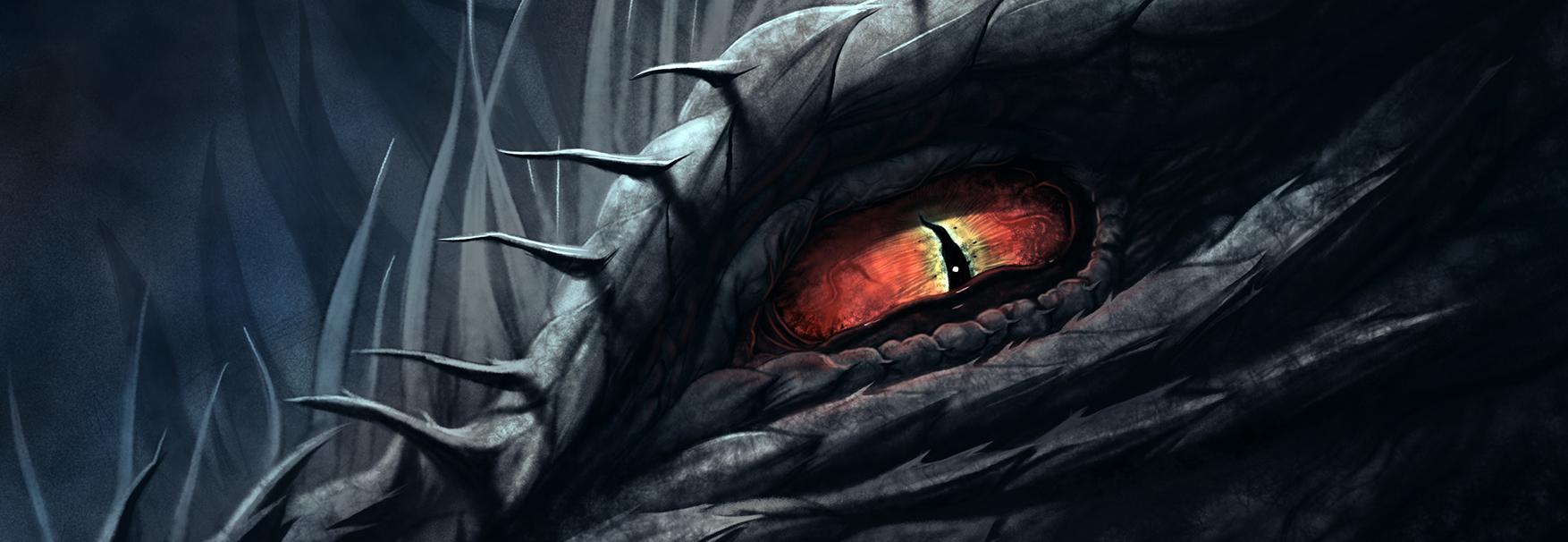
 My story is not the only dragon story in this wonderful anthology featuring the newest voices in speculative fiction. The cover features a spectacular dragon by Ciruelo, the renowned Argentine fantasy artist celebrated for his hyper-detailed dragon paintings and mystical landscapes, blending realism with mythic imagination. His work has defined modern fantasy illustration and inspired generations of artists worldwide, and this stunning dragon is the inspiration for the story written by contest judge Orson Scott Card.
There are many non-dragon stories, too, but for those of you looking for imaginative new interpretations of dragons, you’ll want to read:
“Skinny-Shins” is for readers of visionary speculative fiction, this tale proposes a borderline-impossible yet scientifically grounded origin for a dragon in the Andes—reshaping evolution with one discovery. —Written by Orson Scott Card, inspired by Ciruelo’s The Fire Tribe
“Dragon Visits” is perfect for readers of emotionally rich fantasy, this story follows a boy whose violin melodies summon dragons that help him rediscover connection after loss. —Written by Nina Kiriki Hoffman, Illustrated by April Solomon
“Saffron and Marigolds” is for readers who love whimsical, character-driven fantasy. They will adore this tale of a baker, a cheese-obsessed dragon, and the perilous fairy bargains threatening to tear their found-family bond apart. —Written by Kathleen Powell, Illustrated by Bafu
[/av_textblock]

Joseph Sidari lives in the Boston suburbs with his wife and their labradoodle, Chloe. He is a practicing physician and writer, which means he spends his days keeping real people alive and his nights inventing peril for fictional ones. He is a member of the Grub Street Writers’ Group of Boston, and he is now a member of the Science Fiction and Fantasy Writers Association. His three grown sons and his daughter-in-law live in New York City, though none share the protagonist’s heroic devotion to freeing animals from the Bronx Zoo.
A lifelong reader of speculative fiction, Joseph began writing a dozen years ago after flipping his bicycle while training for a triathlon. His wrist healed, but the habit stuck once he realized that typing would lead to fewer emergency room visits than cycling. After several unpublished novels and a helpful nudge from an agent, he discovered a fondness for short fiction. His stories have been published in various anthologies and earned multiple Honorable Mentions, including two Silver Honorable Mentions in the Writers of the Future Contest.
This story began as one of those honorable mentions. Following the Contest’s advice to “revise and resubmit” if you have nothing new, Joseph completely rewrote his piece about the first and last dragon in America, digging deeper into the heart and soul of the protagonist to create the current version.
Other articles and resources you may be interested in:
Time After Time: Why Time-Travel Stories Captivate Us in Books and Film
The Allure and Terror of First Contact with Aliens
The Death of Social Interaction: How Smartphones and Screen Time Are Destroying Human Connection


Leave a Reply
Want to join the discussion?Feel free to contribute!