
 ISBN: 978-1-59212-269-1
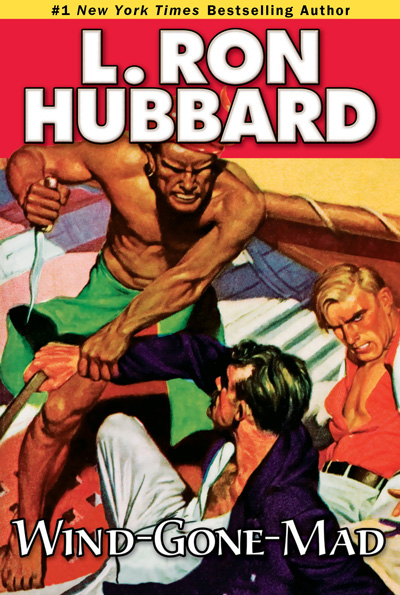
Wind-Gone-Mad
(also includes Tah and Yellow Loot)
Discussion Guide
Wind-Gone-Mad Story Summary & Overview
The mysterious aviator Feng-Feng, “Wind-Gone-Mad,” comes to the aid of Cheng-Wang when the ruthless warlord Hsien-Chung, “The Butcher,” threatens Shan Province with bombers. Unable to oppose them directly, Feng-Feng relies on flying skill, radio deception, disguise, sabotage and psychological manipulation. He impersonates aircraft salesman Blakely, kidnaps The Butcher and secretly disables the bombers before their final attack. His plan saves Taiy and destroys The Butcher’s campaign. Only afterward is Wind-Gone-Mad’s secret revealed: beneath the dragon helmet is respectable American aircraft salesman Jim Dahlgren, who has been secretly fighting to promote a unified and defensible China.
Historical Context: China & the War Lords
Wind-Gone-Mad was originally published in Top-Notch in October 1935. Its fictional conflict reflects the instability of China during the warlord era and the growing importance of military aviation. Provincial armies, competing political authorities, foreign commercial interests and the threat of Japanese expansion all contribute to the story’s atmosphere.
Aircraft had transformed warfare by making it possible to strike cities and armies far behind traditional battle lines. The author makes this technological imbalance central to the plot. The Butcher believes three modern bombers will allow him to conquer Shan Province because Cheng-Wang lacks comparable aircraft. The story consequently explores not only aviation but also the international arms trade. Blakely considers selling weapons simply a business, while Dahlgren argues that sellers bear some responsibility for how their weapons are used.
Chapter One
- The international officers recognize that The Butcher’s bombers threaten an entire province, yet they believe direct intervention could create an international crisis involving Japan. Discuss the conflict between preventing immediate suffering and avoiding a larger war. When does refusing to intervene become a decision with consequences of its own?
- Jim Dahlgren argues that Wind-Gone-Mad supports a unified China capable of resisting “invasion from without and treason from within,” while the officers regard him as a pirate operating outside the law. Discuss whether someone can pursue a worthwhile political goal through unlawful methods. How should we judge a person whose actions may be beneficial but whose authority comes entirely from himself?
- Cheng-Wang admits that he rejected an earlier opportunity to purchase bombers because he did not want to increase taxes and burden his people. Now his province faces an enemy possessing superior air power. Discuss the dilemma between preparing for a possible war and spending resources on the immediate needs of society. How should a leader balance those responsibilities?
Chapter Two
- Wind-Gone-Mad attacks three heavily armed bombers even though he knows his single pursuit plane cannot defeat them directly. His real purpose is to confuse their crews and create uncertainty. Discuss how changing an opponent’s expectations can sometimes accomplish more than attacking his physical strength.
- After destroying The Butcher’s radio station, Wind-Gone-Mad sends the bombers a false message ordering them to return to Sing. Discuss the importance of communications in modern warfare. Why can controlling information sometimes become as powerful as controlling weapons?
- Wind-Gone-Mad successfully prevents the bombing of Taiy for one day but immediately recognizes that he has not solved the underlying problem: the bombers can simply attack again tomorrow. Discuss the difference between solving an immediate crisis and addressing its cause. Why can temporary success sometimes make a larger strategy possible?
Chapter Three
- Blakely admits that selling The Butcher military aircraft may not have been ethical but defends himself by saying that he made money and that “business is business.” Discuss whether manufacturers and salespeople have moral responsibility for the foreseeable uses of the products they sell.
- Wind-Gone-Mad contrasts Blakely with Jim Dahlgren, arguing that Dahlgren tries to make certain his aircraft will not be used in Chinese civil wars. Blakely replies that Dahlgren also profits from selling planes. Discuss whether earning money from an action necessarily weakens the moral value of that action. Can commercial interest and genuine principle exist together?
- Wind-Gone-Mad forces Blakely to exchange clothes with him, knowing that Blakely may be mistaken for the notorious Feng-Feng. Discuss the morality of placing another person in danger as part of a larger effort to save a city. Does Blakely’s role in creating the crisis change how we should judge Feng-Feng’s treatment of him?
Chapter Four
- Wind-Gone-Mad’s disguise is nearly exposed not because of his appearance but because he speaks the Shen dialect too well for Blakely. Discuss why successful deception requires understanding what other people expect rather than simply performing something perfectly. How can excellence itself sometimes become suspicious?
- Disguised as Blakely, Wind-Gone-Mad manipulates The Butcher’s fear of betrayal until the warlord willingly leaves his palace without guards. Discuss how Feng-Feng defeats an apparently more powerful opponent by understanding his personality. What weaknesses can paranoia create in a leader?
- At the airfield, Feng-Feng realizes that he cannot completely disable the three enormous bombers before soldiers arrive. Instead, he removes the detonators from their largest bombs and secretly sabotages their wing supports before escaping with The Butcher. Discuss the importance of adapting a plan when time and circumstances make the original goal impossible. When is an incomplete solution better than continuing to pursue a perfect one?
Chapter Five
- When the bombers approach Taiy, Wind-Gone-Mad orders Cheng-Wang’s artillery not to fire immediately, even though everyone expects the city to be destroyed. He waits until the aircraft dive before springing his trap. Discuss the importance of patience in strategy. Why can acting too early sometimes be as dangerous as acting too late?
- The bombers’ large demolition bombs fail because Feng-Feng removed their detonators and their wings later collapse because of his earlier sabotage. His victory therefore depends largely upon actions taken hours before the final battle. Discuss how preparation can determine the outcome of a crisis before the decisive moment actually arrives.
- The ending reveals that respectable aircraft salesman Jim Dahlgren and the outlaw aviator Wind-Gone-Mad are the same man. The foreign officers praise the outcome while still declaring Feng-Feng’s methods unlawful and Dahlgren quietly conceals his identity. Discuss how this revelation changes our understanding of Dahlgren’s earlier arguments. Why might he believe he can accomplish more as an outlawed anonymous figure than through his legitimate position as a businessman?
Tah
Discussion Guide
Tah Story Summary & Overview
Twelve-year-old Tah serves as a soldier in General Chang’s army alongside his young friends Wung and Tsing. Although Tah dreams of becoming a general, his thoughts continually return to school, family, gardens and the ordinary pleasures of childhood. Ordered on a punishing march toward battle, the boys endure exhaustion, dust, hunger and aching equipment before reaching the front. When enemy troops attack, Tah obediently fires alongside his comrades. Trivenak, the officer who encouraged him, is killed, followed by Wung and Tsing. Finally bayoneted himself, Tah dies imagining Tsing’s toy top and believing he will soon awaken and return to school.
Historical Context: Chinese Child Soldiers
Tah presents war almost entirely through the eyes of a twelve-year-old child. Rather than concentrating on generals, political objectives or military strategy, the story focuses on what warfare means to children who have been absorbed into an adult conflict. Tah carries a rifle, stands guard, marches with an army and kills when ordered, yet his thoughts remain those of a boy: school, toys, gardens, his parents, sore feet and his friends.
The story is set against the instability and warfare that affected China and Manchuria during the early twentieth century. Competing military forces could place enormous burdens on rural populations. The author briefly shows this when General Chang’s five thousand soldiers camp on farmland shortly before harvest, exhausting local supplies and damaging fields. The reference to Trivenak as a White Russian also reflects the presence in China of Russians displaced by the Russian Revolution and Civil War. The most important social issue, however, is the use of child soldiers.
Discussion Questions
- Tah is only twelve, yet he takes pride in being a good soldier and dreams of someday becoming a general. Discuss whether Tah’s ambition represents a genuine choice or an attempt to make the best of circumstances he cannot control. How does his age affect the way we judge his enthusiasm for military life?
- Tah admires Trivenak, who treats him kindly, bandages his injured hand and tells him that he might become a general someday. Yet Trivenak is also an officer helping lead children into combat. Discuss how a person can behave compassionately toward an individual while still participating in a system that harms that individual.
- Wung asks Tah whether he truly likes being a soldier “way down in heart,” but the conversation ends when the assembly bugle sounds. Discuss why this unfinished conversation is important. What might Tah have said if military duty had not interrupted them?
- During the march, Tah repeatedly thinks about school, his family, temple gardens, birds, goldfish, monks and Tsing’s new top. Discuss why the story places these peaceful memories alongside descriptions of exhaustion and military discipline. How does the contrast influence our understanding of what Tah has lost?
- General Chang’s army marches through farmland shortly before harvest and has already exhausted much of the surrounding food supply. Discuss how armies can affect civilians even when no battle is taking place. What costs of warfare are revealed by focusing on farmers, food and damaged fields rather than battlefield casualties?
- Tah, Wung and Tsing endure an exhausting march with almost no rest, carrying rifles and equipment designed for adult soldiers. Tah nevertheless keeps reminding himself that he will become a general someday. Discuss how hope can help people endure suffering. Can the same hope also make them accept circumstances they might otherwise resist?
- When the enemy approaches, Tah automatically follows his training: load, aim, fire, reload. The story gives readers almost no information about who the opposing soldiers are or why the armies are fighting. Discuss the effect of leaving the political purpose of the battle unclear. Does knowing the cause of a war change how we view children being ordered to fight it?
- Trivenak, Wung and Tsing are killed in rapid succession, but Tah continues loading and firing almost mechanically. Discuss how training, fear, shock and instinct might affect a person’s behavior during extreme violence. Why might someone continue performing familiar actions even when emotionally overwhelmed?
- Throughout the story, Tah measures himself by adult military standards: soldiers do not complain, good soldiers do not run and accurate shooting is something to be proud of. Yet the reader continually sees the child underneath the uniform. Discuss how the story challenges the idea that giving a child a weapon, uniform and military responsibilities can actually make that child an adult.
- As Tah dies, his thoughts do not turn to military glory or becoming a general. He sees Tsing’s top and imagines that he will wake up and return to school. Discuss why the author ends the story with these images of childhood. How does Tah’s final thought change the meaning of his earlier dream of becoming a general?
Yellow Loot
Discussion Guide
Yellow Loot Story Summary & Overview
Brad Williams accompanies his uncle Jeremiah and four scientists to ancient tombs north of Peking, where they discover a fortune in amber. Armed bandits seize the treasure and Brad is captured after fighting to protect the expedition. Taken deep into the Western Hills to a remote lamasery, he faces a deliberately unfair duel intended to end in his death. Brad escapes, disguises himself as a lama, recovers the stolen amber and flees on horseback. Pursued onto the Great Wall, he survives a deadly chase and reaches Nankou. Returning to Peking, Brad casually presents the astonished scientists with their recovered treasure.
Historical Context: Archeology and the West Hills of China
Yellow Loot was first published in Thrilling Adventures in October 1934 and combines several popular elements of 1930s adventure fiction: archaeology, lost treasure, remote Asian settings, bandits, ancient monuments and a resourceful hero confronting seemingly impossible odds. The story takes place north of Peking—modern Beijing—and eventually carries Brad into the Western Hills and onto the Great Wall. The Great Wall was not one continuous structure built at a single time but a series of defensive walls and fortifications constructed and rebuilt over many centuries. Much of the monumental wall familiar today dates from the Ming dynasty. By the twentieth century, the Great Wall had also become an enormously powerful cultural symbol both within China and in Western representations of the country. Archaeology provides another important background to the story. Jeremiah Williams and his companions regard the amber from the Chang tombs both as an archaeological discovery and as something of enormous financial value.
Discussion Questions
- Brad warned the scientists that traveling to the Chang tombs could be dangerous, but they dismissed him as young and imaginative. When his warnings prove justified, Brad immediately assumes responsibility for protecting them. Discuss why people sometimes discount warnings because of the age or status of the person giving them. What makes a warning worth taking seriously?
- The expedition removes valuable amber from an ancient tomb and regards the discovery as essential to its financial survival. Discuss the difference between archaeological exploration and treasure hunting. Who should have the strongest claim to objects recovered from an ancient burial site—the discoverers, the people who financed the expedition, the government or the culture from which the objects originated?
- Brad’s first violent encounter shocks him when he realizes that he has taken a human life, but immediate danger forces him to continue fighting. Discuss how the story distinguishes between Brad’s emotional reaction to violence and the practical actions he believes survival requires. Why is that brief moment of realization important to his character?
- The five scientists quickly become dependent upon Brad once violence begins, even though they had previously dismissed his concerns. Discuss how emergencies can suddenly change relationships within a group. What qualities cause leadership to shift from one person to another during a crisis?
- After the bandits capture the expedition, Jeremiah seems almost as concerned about losing the amber as he is about Brad’s fate. Discuss how fear, financial desperation and personal priorities can affect people’s behavior in a crisis. What does Jeremiah’s reaction reveal about him?
- Brad is carried into the Western Hills and eventually realizes that he is near the Great Wall. Discuss how the author uses real geography and famous landmarks to make an exaggerated adventure seem more believable. How does recognizing an actual place change a reader’s response to a fictional escape?
- Brad’s captors describe his coming ordeal as a “duel,” but they bind his arms, give him no weapon and force him toward the edge of a high tower with a sword. Discuss why people sometimes use honorable language to disguise cruelty or injustice. What actually makes a contest fair?
- Brad escapes because one of the officer’s sword strokes accidentally cuts the rope binding his arms. He immediately recognizes the opportunity and turns the officer’s own confidence against him. Discuss the relationship between luck and skill in Brad’s survival. At what point does taking advantage of good fortune become a form of ability?
- Brad uses a yellow robe and ceremonial mask to disguise himself and simply walks through the monastery. Discuss why confidence and people’s expectations can make a disguise effective even when close examination might expose it. How often do people see what they expect to see?
- After surviving capture, torture, pursuit, wounds and exhaustion, Brad returns to his uncle’s hotel and casually drops the recovered amber on the table. Jeremiah responds by immediately examining the treasure. Discuss the humor and irony of the ending. What does the scientists’ reaction suggest about the difference between Brad’s experience and their understanding of what he endured?