
 ISBN: 978-1-59212-273-8
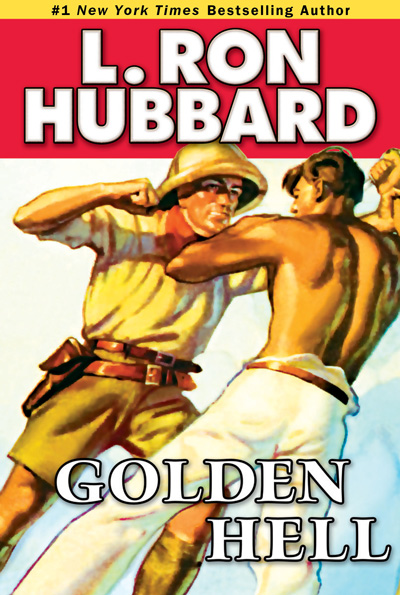
Golden Hell
(also includes Pearl Pirate)
Discussion Guide
Golden Hell Story Summary & Overview
Prospector Humbert Reynolds has devoted his life to finding gold, following rumors of hidden riches into the vast and unforgiving Gobi Desert. After narrowly escaping death at the hands of a Mongolian cavalry officer, his relentless pursuit of wealth leads him into dangers far greater than he ever imagined. Surrounded by hostile forces, mysterious landscapes and extraordinary discoveries, Reynolds must decide how much he is willing to sacrifice in pursuit of his dream. The author blends historical adventure, survival and suspense into a story that explores the powerful attraction—and terrible cost—of greed.
Historical Context: Mongolia and the Gobi Desert
Golden Hell takes place in Mongolia and the Gobi Desert during the turbulent 1930s, when the region was influenced by competing political powers, including Soviet interests, Chinese authority, Japanese expansion and traditional Mongolian leadership. Although the novel is fictional, it draws upon the real geography of Central Asia and the fascination explorers and prospectors held for the vast deserts of Mongolia.
At the time, much of the Gobi remained largely unexplored by Western travelers. Stories of lost cities, hidden monasteries and undiscovered mineral wealth fueled expeditions across one of the world’s harshest landscapes. The author uses this authentic setting to create a fictional adventure rooted in the genuine challenges of exploration.
Chapter One: The Lure of Gold
- Why does the possibility of finding gold immediately capture Humbert Reynolds’s imagination? A single conversation convinces Reynolds to pursue an uncertain dream across one of the world’s harshest environments. Discuss where healthy ambition ends, and dangerous obsession begins.
- How does Reynolds view himself—as an explorer, a professional prospector, or someone becoming consumed by the search for wealth? Gold has shaped nearly every important decision Reynolds has made. Examine how his motivations influence the risks he is willing to accept.
- How has the geography of the Gobi Desert influenced exploration and trade throughout history? The Gobi has challenged travelers for centuries while also serving as an important crossroads in Asia. Research how its geography creates both opportunities and dangers for explorers.
Chapter Two: Caught Between Armies
- How does Biki defeat a stronger force through planning rather than superior numbers? Biki succeeds by using strategy, concealment and careful timing instead of relying solely on strength or bravery. Discuss why military history often shows that thoughtful planning can overcome larger armies.
- Why does Humbert Reynolds become caught between rival groups, and what does this suggest about individuals caught in larger political conflicts? As competing forces struggle for control, Reynolds becomes valuable to each side for different reasons. Compare this with historical or modern situations which ordinary people become trapped by conflicts beyond their control.
Chapter Three: The Price of Discovery
- Why does discovering gold encourage Reynolds to take even greater risks? Instead of satisfying his ambition, success only increases his determination to continue. Discuss why valuable discoveries sometimes inspire people to accept even greater dangers.
- Is optimism a strength or a weakness during dangerous situations? Even while fleeing for his life, Reynolds remains confident he can survive. Discuss when optimism helps people persevere and when it may encourage unnecessary risk.
Chapter Four: The Unknown
- Why do unfamiliar customs sometimes create fear or misunderstanding? When Reynolds encounters the chanting Lama priests, he immediately senses danger, without fully understanding what he is witnessing. Discuss how people can distinguish between genuine threats and assumptions based on unfamiliarity.
Chapter Five: Into the Golden Hell
- How does Reynolds struggle between logical thinking and emotional fear as he descends deeper underground? Although Reynolds constantly explains events in terms of geology and engineering, he cannot escape the feeling that he is entering something far more terrifying. Discuss how reason and emotion often compete during stressful situations.
- How does the author use setting and atmosphere to build suspense throughout this chapter? Descriptions of darkness, sound, heat and isolation create a powerful emotional response.
Identify the details that most effectively influence the reader’s imagination and explain why they are so effective.
Chapter Six: Wealth Built on Misery
- Why is it ironic that prisoners surrounded by enormous wealth live in desperate conditions? The miners work among extraordinary riches while enduring extreme hardship themselves. Compare this situation with historical examples where workers produced great wealth but received little benefit.
- Why are valuable natural resources so often connected with conflict and exploitation? Throughout history, gold and other valuable resources have frequently become sources of competition and suffering. Discuss why wealth can create struggles for power rather than prosperity for everyone involved.
Chapter Seven: Knowledge Becomes Power
- Why is oil often called “black gold,” and how does the story illustrate its importance? The underground oil reserve becomes nearly as valuable as the gold itself. Compare the importance of petroleum during the twentieth century with other strategic natural resources today.
- How does Reynolds’s engineering knowledge become both an advantage and a danger? The very expertise that has helped Reynolds survive now makes him valuable to his captors. Discuss how specialized knowledge can create opportunities while also increasing people’s risk.
Chapter Eight: New Allies
- Why do Humbert Reynolds and Yang T’ang become allies after beginning the story as enemies? Shared dangers force former adversaries to work together for survival. Discuss other historical or literary examples where common goals transformed rivals into partners.
- Which force most strongly shapes the events of Golden Hell—greed, fear, survival, loyalty or knowledge? Different characters are motivated by different priorities throughout the story. Support your conclusion with examples from the novel.
- What relationship does the story suggest exists between wealth and danger? Nearly every important discovery in the novel brings new conflict rather than security. Discuss why valuable resources so often become connected with risk, violence and difficult moral choices.
Pearl Pirate
Discussion Guide
Pearl Pirate Story Summary & Overview
After returning from months of adventure in the Coral Sea, Smoke Engel discovers he has been cheated out of his boat by a dishonest moneylender. Before he can recover what belongs to him, the notorious pirate Portuguese Joe steals a fortune in priceless black pearls, drawing Smoke into a dangerous chase across the islands and open sea. Pursued by pirates, smugglers and double-crossing criminals, Smoke must rely on courage, determination and quick thinking to survive. The author delivers a fast-moving adventure filled with sea battles, betrayal and unexpected alliances.
Historical Context: Pearl Diving in the Coral Sea
Pearl Pirate takes place in the Coral Sea and the islands of the western Pacific, where pearl diving once formed an important international industry. Before cultured pearls became common, natural pearls ranked among the world’s most valuable gems. Divers often risked their lives in dangerous waters while traders, merchants and sometimes pirates competed to control the profitable trade.
The Coral Sea connected diverse island cultures with international shipping routes throughout the Pacific. Its remote islands, valuable natural resources, and busy maritime traffic made the region both an important commercial center and an ideal setting for adventure fiction during the early twentieth century.
Chapter One: A Dangerous Proposition
- Where should the line be drawn between a hard bargain and exploitation? Smoke believes Chan Tso-lan has taken advantage of him through an unfair financial agreement. Discuss how business negotiations can become unethical even when they remain technically legal.
- What most motivates Smoke to pursue the stolen black pearls? Smoke accepts a dangerous mission that offers both risk and reward. Discuss whether justice, revenge, financial need, or personal pride plays the greatest role in his decision.
- What qualities allow Smoke to continue fighting despite overwhelming odds? Although wounded and badly outnumbered, Smoke refuses to surrender. Identify the personal characteristics that help him persevere and compare them with real historical or contemporary examples.
Chapter Two: Across the Coral Sea
- Why does the comparison to famous privateers such as Henry Morgan and Francis Drake shape the reader’s view of Smoke? The story places Smoke within a long tradition of daring seafarers and adventurers. Discuss how these historical figures compare to Smoke’s character.
- How should readers approach historical portrayals of different cultures? The story reflects attitudes and assumptions regarding different cultures common when it was written. Compare the fictional portrayal with modern understanding of the subject.
Chapter Three: Endurance Under Pressure
- Which quality proves more valuable throughout the story—physical strength or determination? Portuguese Joe often appears physically stronger, while Smoke survives through endurance, quick thinking and persistence. Discuss which quality contributes more to success and explain your reasoning.
- Which of Smoke’s personal qualities have helped him survive, and which might create future problems? By the end of the chapter, Smoke has escaped numerous dangers but continues taking enormous risks. Discuss how the same strengths that help someone succeed can also become weaknesses.
Chapter Four: Nature as an Opponent
- How does the natural environment become as dangerous as the story’s human villains? Smoke faces sharks, barracudas and the hazards of the open sea in addition to pursuing enemies. Compare the challenges posed by nature with those created by human conflict.
- Does Smoke respond differently to natural dangers than he does to human threats? Throughout the story, Smoke adapts his approach depending on the type of danger he faces. Discuss whether these differences reveal important aspects of his character.
Chapter Five: Broken Trust
- Why is rebuilding trust so difficult once it has been broken? Smoke briefly believes Chan intends to honor their agreement only to discover yet another betrayal. Discuss why repeated dishonesty permanently changes relationships.
- At what point does the pursuit of justice become revenge? Smoke’s determination to confront Chan drives him into another dangerous situation. Evaluate whether his actions remain focused on justice or whether personal vengeance begins guiding his decisions.
Chapter Six: Fate and Justice
- How does irony shape Chan’s downfall? Rather than being defeated directly by Smoke, Chan’s fate unfolds through unexpected circumstances. Compare this ending with other examples from literature or history where irony plays a central role.
- Which quality contributes most to Smoke Engel’s survival throughout the story? Courage, determination, intelligence, physical strength, luck and timing all influence the outcome. Decide which factor matters most and support your conclusion with examples from the story.
- How much of Smoke’s success results from careful planning, and how much depends upon chance? Some victories come through preparation and skill, while others arise from unexpected events. Discuss what the story suggests about the relationship between fate and personal effort.