
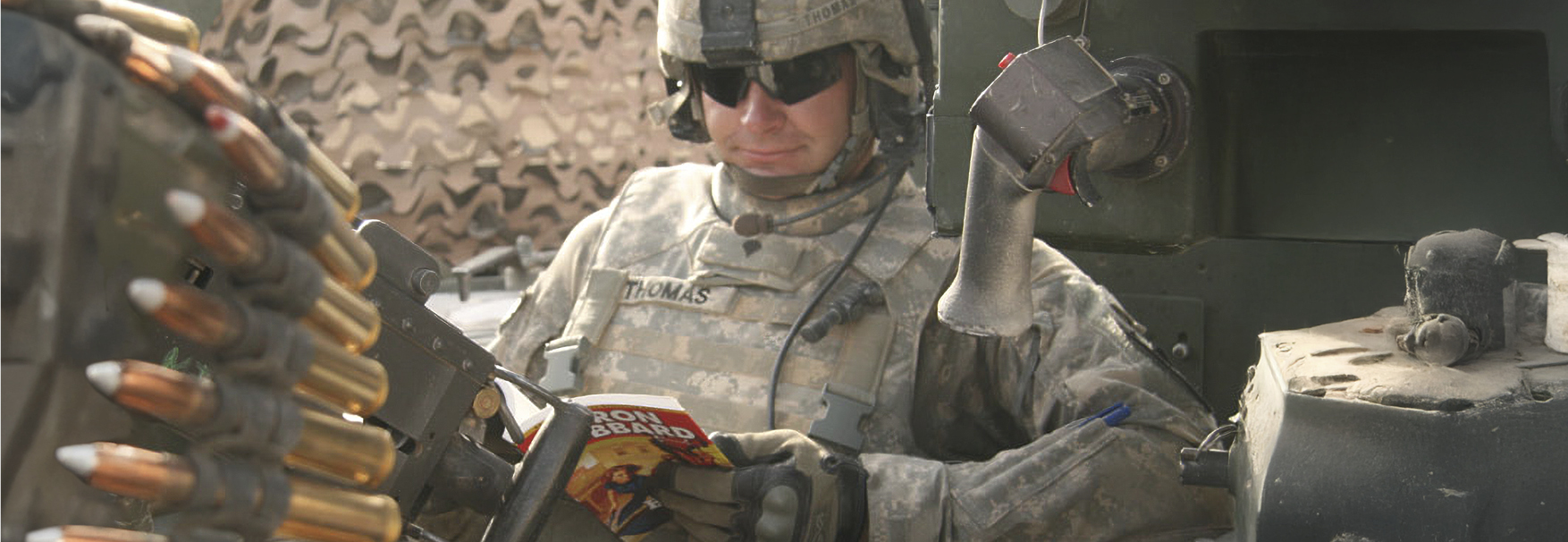
Books for Those Who Serve: Why Reading Matters for Our Military
Guest blogger Dr. Lee Carroll (AKA EL Whitehorse)
Every year, more than 100,000 military parents deploy, leaving nearly 250,000 children at home. For service members stationed overseas, the isolation can be profound—far from family, far from the familiar comforts of home, navigating the intense stress of deployment. Forty-one percent of veterans need mental health care programs every year, and 29% of those who served in Iraq and Afghanistan have developed or will develop mental health problems at some point in their lives. These aren’t just statistics. They’re our neighbors, our friends, the men and women who put on the uniform to protect our freedom.
In the midst of this challenge, books become more than entertainment. They become lifelines.
The Hidden Mental Health Crisis
Since 2001, 2.8 million active-duty military personnel have deployed to Iraq, Afghanistan, and other conflict zones. Yet only 45% of the nation’s 18 million veterans use VA services, leaving millions to navigate mental health challenges alone. The numbers are sobering: veterans are five times more likely to experience major depression than civilians. Many struggle with anxiety, substance use disorders, and the invisible wounds of war that can persist for years after they return home.
But here’s something remarkable: research shows that reading for just six minutes can reduce stress by 68%—more effectively than listening to music, drinking tea, or taking a walk. A 2009 study at the University of Sussex found that immersing yourself in a story slows your heart rate, eases muscle tension, and fundamentally alters your state of mind. For service members facing the daily stresses of deployment, fiction provides a mental escape that promotes genuine healing.
In the UK, doctors now prescribe books as treatment for anxiety and depression—a practice called bibliotherapy. Fiction doesn’t just distract; it builds empathy, strengthens cognitive resilience, and offers new perspectives for navigating difficult emotions.
Why Books Matter in the Field
Military reading culture has deep roots. During World War II, publishers created the Armed Services Editions—pocket-sized paperbacks designed to fit in a soldier’s uniform. From Shakespeare to mysteries to adventures, these books traveled to battlefields around the world, offering troops a taste of home and a temporary refuge from the horrors of war. One soldier wrote that reading about home-cooked meals while eating rations “was like taking a leave.”
Reading gives deployed service members connection to home during isolation, a mental escape from combat stress, and a powerful morale builder. Stories provide coping mechanisms, offer hope, and remind those who serve that they’re not alone. Whether it’s adventure, humor, or tales of courage, the right book at the right time can make all the difference.
Galaxy Press Partners with Operation Paperback
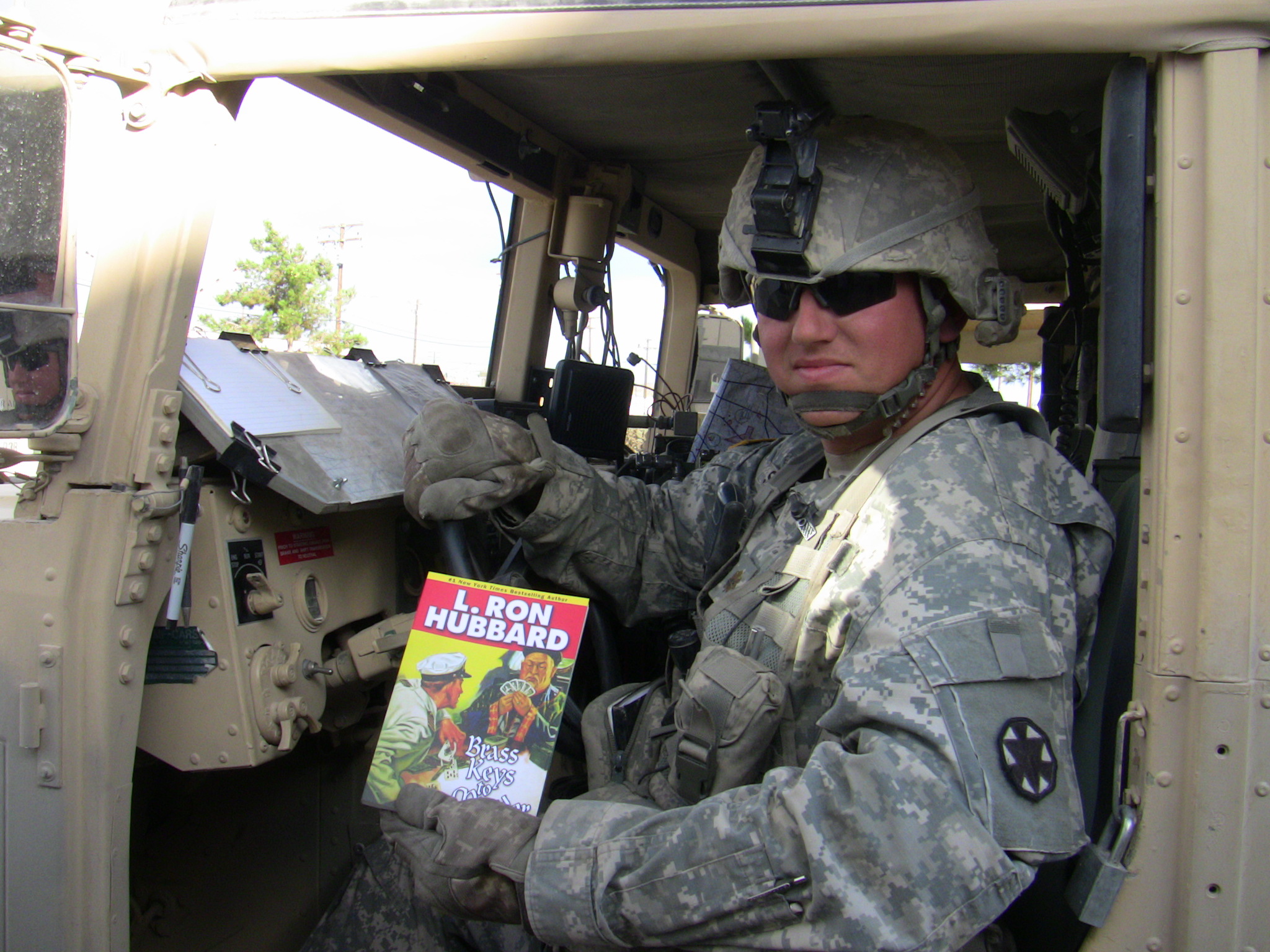
That’s why Galaxy Press has launched an ongoing partnership with Operation Paperback, a nonprofit organization dedicated to sending books to members of the US military, veterans, and their families. Together, we’re delivering boxes filled with the imaginative fiction of L. Ron Hubbard—stories of courage, discovery, and the unbreakable human spirit.
Our shipments include titles that resonate with the experiences and aspirations of those who serve:
- Battlefield Earth: An epic tale of resistance, where an underdog hero never gives up, no matter the odds.
- Mission Earth: A ten-volume satire that brings humor and levity to dark times—perfect for a long deployment.
- To the Stars: A journey of exploration and the universal longing for home.
- Action & Adventure stories from the Golden Age: High-stakes heroism set in far-flung locations around the world.
- Writers of the Future anthologies: Fresh voices offering hope, imagination, and new perspectives from emerging talent.
The impact is real. M.C., wife of USAF Staff Sergeant J.C., wrote after receiving one of our packages: “I wanted to reach out and say I cannot thank you enough for this package! To receive a box stuffed full of amazing books from the King of Science Fiction absolutely took my breath away. As soon as I let my husband know what was inside, he was ecstatic and he cannot wait to dive in.”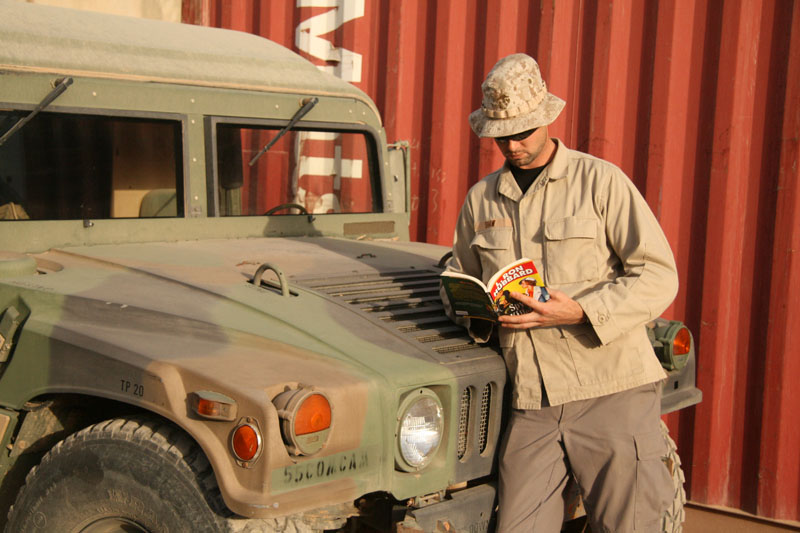
Honor Their Service
Our service members sacrifice time with loved ones, endure physical and mental hardship, and face danger so we can sleep safely at night. Research shows that reading improves mental well-being, reduces stress, and provides comfort during the hardest times. When we send books to those who serve, we’re offering more than entertainment—we’re offering connection, hope, and a moment of peace.
Join us in expanding this effort. Send a gift of books to active-duty personnel and veterans worldwide through our Operation Paperback partnership. Choose from our Starter Gift Box Collection (5 titles, $125), Premium Gift Box Collection (10 titles, $250), or choose our largest collection (20 titles, $500). Every box delivers adventure, escape, and the reminder that they’re not forgotten.
Honor their service with the gift of adventure. Visit galaxypress.com/operation-paperback to send books today.
Bibliography: Books for Those Who Serve
Reading & Mental Health Benefits
University of Sussex (2009) — Stress Reduction Study
- Lewis, David. “Galaxy Stress Research.” Mindlab International, University of Sussex, 2009.
- Finding: Reading reduces stress by 68% in just 6 minutes
- Citation used in: NAMI California, Reading Partners, MHFA England, multiple peer-reviewed sources
- Secondary source: NAMI California. “Why Reading is Good for Mental Health.” December 23, 2020.
Bibliotherapy Research
- Carney, J., & Robertson, C. “Five studies evaluating the impact on mental health and mood of recalling, reading, and discussing fiction.” PLOS One, April 8, 2022. https://journals.plos.org/plosone/article?id=10.1371/journal.pone.0266323
- Clinical Psychology Review. “Meta-analysis on Bibliotherapy for Depression.” 2008.
- Modern Diplomacy. “Book Therapy: Exploring the Mental Health Benefits of Reading Fiction.” November 26, 2024. https://moderndiplomacy.eu/2024/11/26/book-therapy-exploring-the-mental-health-benefits-of-reading-fiction/
Fiction & Empathy
- Science Journal. “Reading Literary Fiction Enhances Empathy.” 2013.
- Citation: Research showed reading literary fiction improves “theory of mind” and empathy performance
Military Reading Culture & History
United Through Reading
- United Through Reading. “Our Impact” October 3, 2024. https://unitedthroughreading.org/about/our-impact/
- 100,000+ military parents deploy annually
- Nearly 250,000 children left at home
WWII Armed Services Editions
- Manning, Molly Guptill. “When Books Went to War: The Stories That Helped Us Win World War II” NPR interview, December 10, 2014. https://www.npr.org/2014/12/10/369616513/wwii-by-the-books-the-pocket-size-editions-that-kept-soldiers-reading
- History of pocket-sized paperbacks for troops
- Soldier testimonial: reading was “like taking a leave”
Military Reading Benefits
- NSIN (National Security Innovation Network). “What Soldiers Love to Read During Downtime? Top Picks for Military Personnel.” March 6, 2025. https://www.nsin.us/what-soldiers-love-to-read/
- Studies show receiving personal letters/mail boosts morale and mental well-being
- Reading serves as escape, education, and comfort
Additional Supporting Research
Sleep & Reading
- Sleep Council. “Reading before bed improves sleep quality.” 2017.
- 39% of individuals who read before bed reported better sleep
Cognitive Benefits
- “Adults who engaged in mentally stimulating activities like reading had slower rate of memory decline.” 2013.
- Reading reduces mental decline by 32% in later life
General Mental Health Impact
- National Endowment for the Arts survey: Individuals who read regularly are 17% more likely to report higher levels of mental well-being
- American Library Association: 50% of adults who engage in fiction reading say it helps them “escape reality”
Note: All statistics and research findings have been verified through multiple credible sources including peer-reviewed journals (PLOS One, Science), government agencies (VA, SAMHSA), research institutions (University of Sussex), and established mental health organizations (NAMI, MHFA England).

Dr. Lee Carroll (AKA EL Whitehorse)
Working abroad in 10 countries of Europe, Asia, Africa, North and South America, both as a doctor and teacher, has shown me life through a prism of viewpoints. That experience has enriched my writing to the point where I enjoy showcasing the admiration I feel for varied cultures.
For example, my WOTF Semi-finalist entry is published for Kindle as Death Clearinghouse: The Novelette, featuring Apache ingenuity. Coming soon is my next sci-fi series Coko: An Android’s Heartfire Awakening.
When I’m not writing, I’m yanking swords out of stones around the world.
Amazon author page: https://www.amazon.com/stores/author/B07TRC1F4V/about
Leave a Reply
Want to join the discussion?Feel free to contribute!


Such an important topic. I appreciate how you emphasize reading as a source of strength and understanding.