

Yesterday a Slave, Today a Shipmate
Freedom Under the Black Flag in L. Ron Hubbard’s Under the Black Ensign
Guest blogger Dr. Lee Carroll (AKA EL Whitehorse)
Picture a man who, a week ago, was property. Bought, sold, his back a roadmap of the lash. Today he stands on a heaving deck as a cutlass is pressed into his hand and a rough voice calls his name, fairly, in the counting out of shares. On the mainland he is a commodity. Here, under a black flag, he is a shipmate with a vote.
That trade, chains for a cutlass and a say, was real. And for thousands of men of color in the Golden Age of Piracy, it was the freest deal the Atlantic world had to offer.
First, a word about that flag, since it flies over the whole story. To sailors of the day, a black flag was the merciful signal: strike your colors and surrender, and your lives would be spared. Only when a ship fought back did pirates run up a blood-red flag, the “no quarter” banner whose French name, joli rouge, or “pretty red,” likely gave us the words “Jolly Roger,” a promise that no one aboard would live (National Maritime Museum, n.d.). The black ensign, in other words, was a flag of second chances. Hold that thought.
A young pulp fiction magazine writer named L. Ron Hubbard understood that trade. In 1935 he built an entire pirate adventure around it, and we will come back to his hero before we are done. But the history beneath the fiction is wilder than any story, so let us start there.
The World They Were Fleeing
To understand why a man would choose a life lived one step ahead of the gallows, you have to understand what he was running from. L. Ron Hubbard put it plainly in his essay “Yesterday, You Might Have Been a Pirate”: the sea rover was not born wicked, he was “driven into piracy by the conditions which surrounded” his life. Navy and merchant crews were flogged for forgetting to salute an officer, starved on green-scummed water, press-ganged off tavern floors, and paid, when they were paid at all, in coins already promised to shore-side lenders. “The only way you could escape the cat-o’-nine,” Hubbard wrote, “was to turn pirate.”
Now run that same brutal arithmetic for a man who was not merely mistreated labor but legally owned. For him, the pirate deck offered the one thing the plantation and the merchantman never would: a way out.
The Deal on the Deck
And the way out came with startlingly modern terms. Pirate ships ran on written articles, a code every man signed. Under it, each pirate had “a voice in the affairs of the moment.” Every man was “called fairly by name” in the division of plunder. A man who lost a limb was compensated from the common fund. Crews elected their captains, and could vote them right back out again.
For a man of color, those articles could mean the first vote of his life, the first fair share, the first weapon he was ever trusted to carry. Historian Marcus Rediker calls the pirate ship a “multiracial maroon community,” a floating society that elected its officers and split its takings evenly at a time when the world ashore did neither (Rediker, 2004). The numbers hold up the picture. Historians estimate that a quarter to a third of Golden Age pirates were former plantation slaves, and Blackbeard’s own crew may have been 40 percent Black (Rediker, 2004; Golden Age of Piracy, n.d.). Pirates even borrowed the word “Maroon,” the name carried by the free communities of runaway slaves in the hills of Jamaica, and used it for themselves.
One of them became a legend. Black Caesar, by tradition an African chieftain who escaped a slave ship, raided the Florida Keys and later sailed under Blackbeard himself (Vallar, n.d.).
The Honest Part
It would be a tidy story to stop there. But history rarely runs tidy, and the truth is more interesting anyway. Pirates were outlaws, not abolitionists: they were after their own freedom and a share of the plunder, not the end of slavery as a moral cause. Some crews forced captured Black men into the worst work aboard; others sold the people they seized. Stede Bonnet, a wealthy planter remembered as “the gentleman pirate,” handed captured slaves back to their owners in South Carolina. And when the noose finally came, justice split by color: a captured white pirate was usually hanged, while a captured Black pirate was often sold back into slavery, the fate of roughly twenty of Bartholomew Roberts’s men after his death (Bialuschewski, 2011; Golden Age of Piracy, n.d.).
So the black flag was not a banner of equality by principle. It was something rougher, and in its way more striking: a place where shared misery and a common enemy could dissolve a color line that every “civilized” institution ashore was built to enforce. For a Black sailor, the pirate deck was at once one of the freest berths in the Atlantic and still no escape from the slave economy pressing in on every side. Both things are true at once, and that is exactly what makes the history worth telling.
A Young Writer Who Saw It
Which brings us to a writer who spotted the drama in that very collision. In August 1935, a 24-year-old L. Ron Hubbard published his first pirate tale, Under the Black Ensign, in the pulp magazine Five Novels Monthly. He knew the waters firsthand. A few years earlier he had sailed thousands of miles of the Caribbean on an expedition of his own, and that salt-and-sun knowledge runs all through the story.
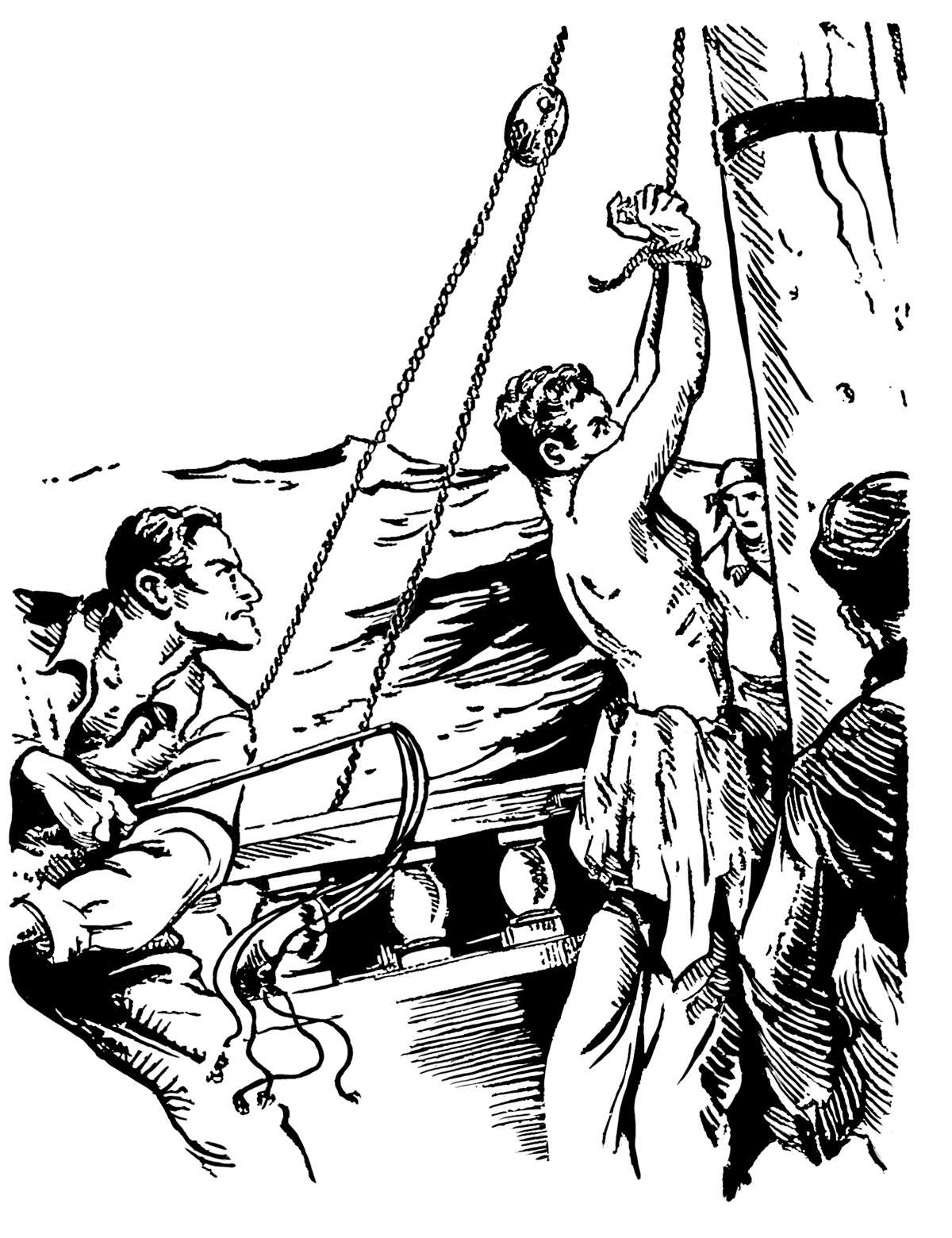
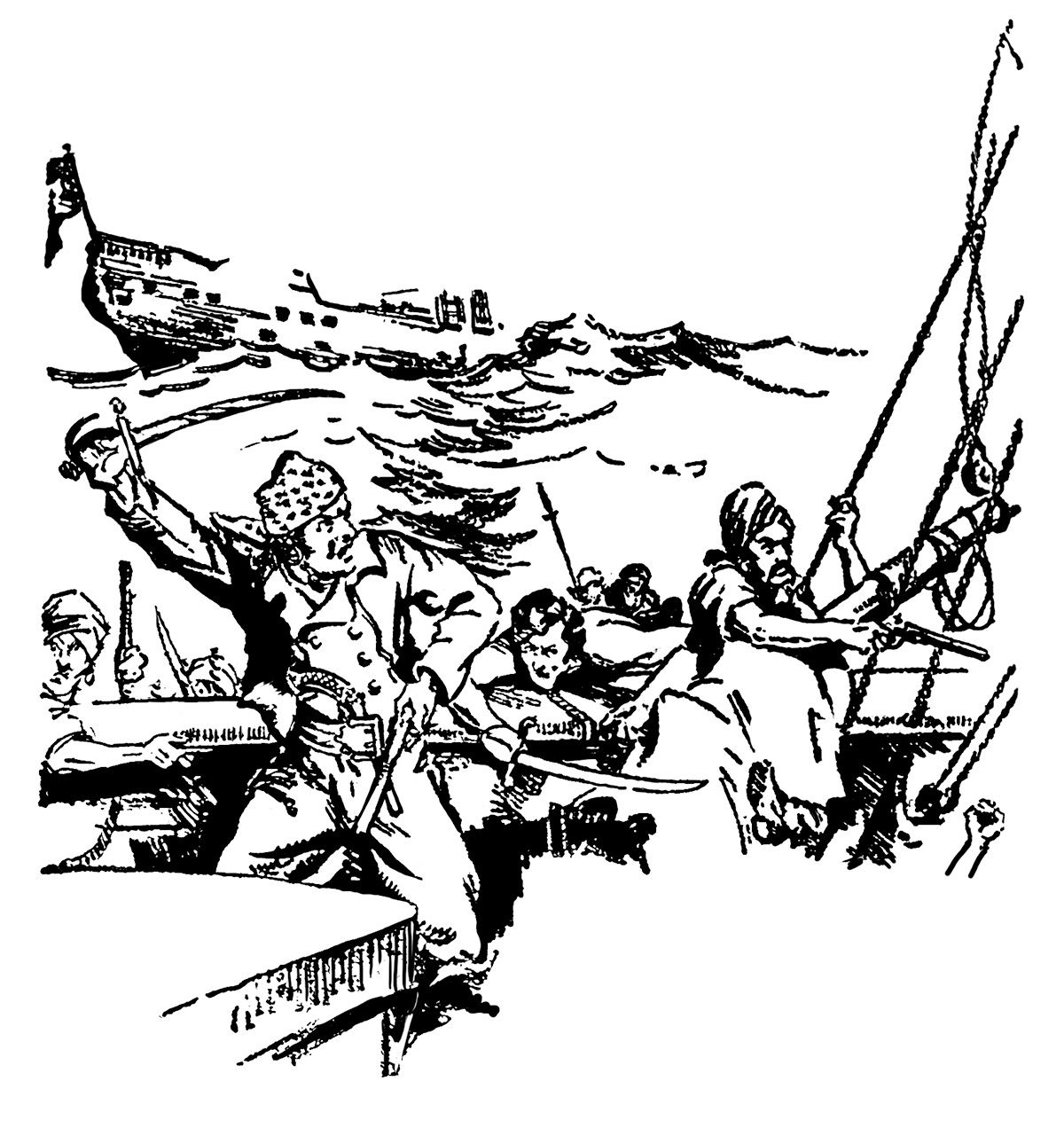
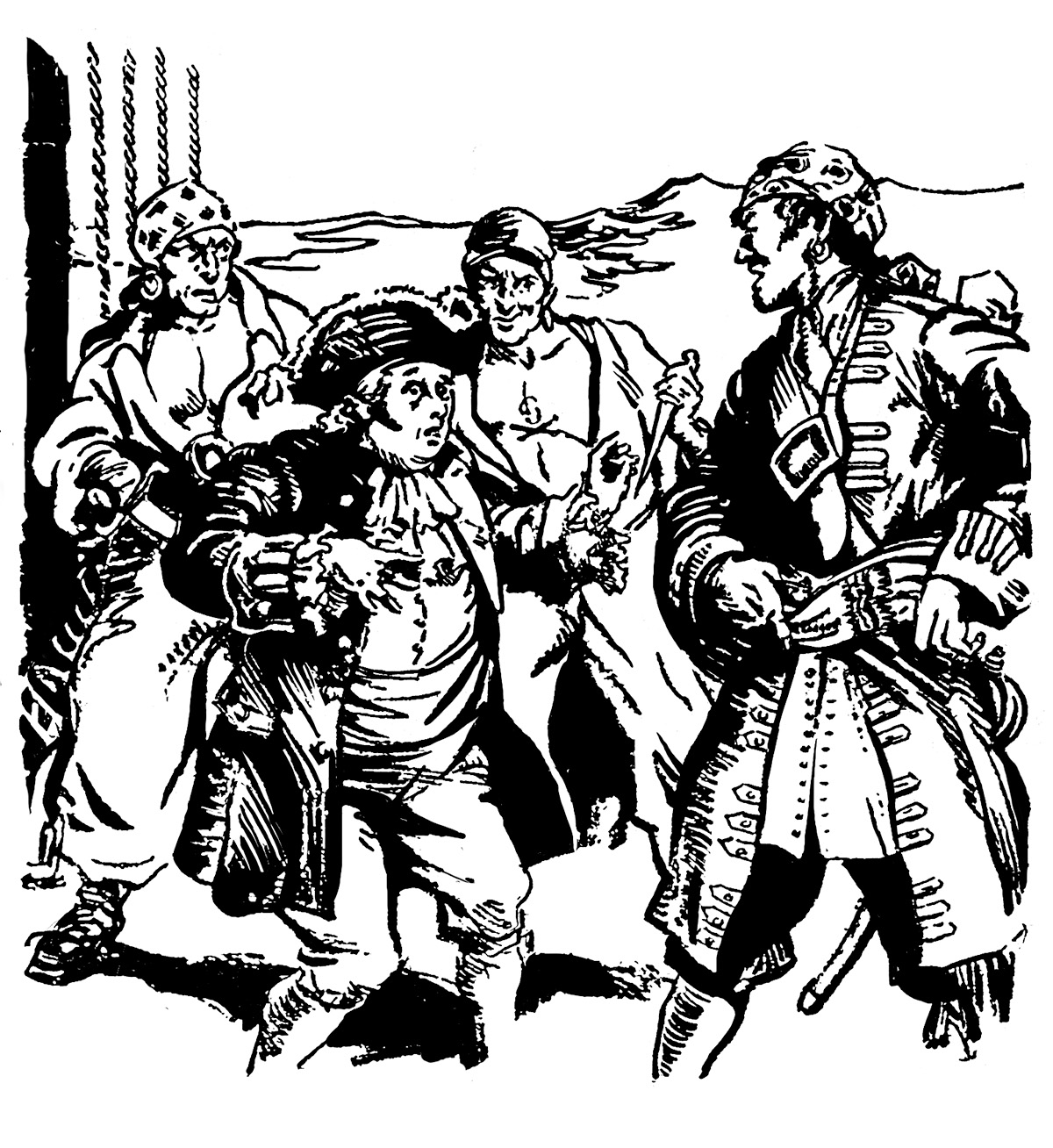
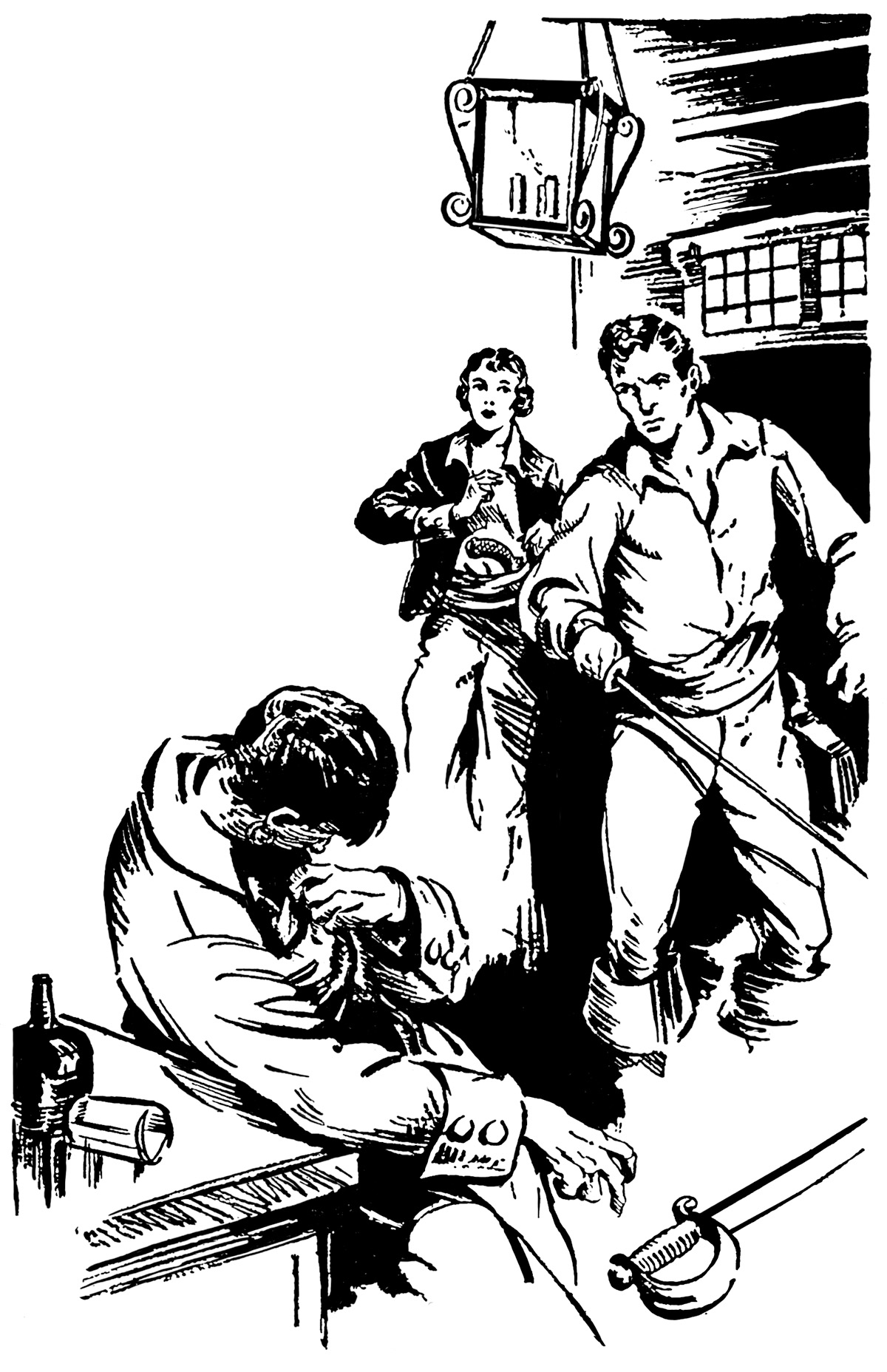
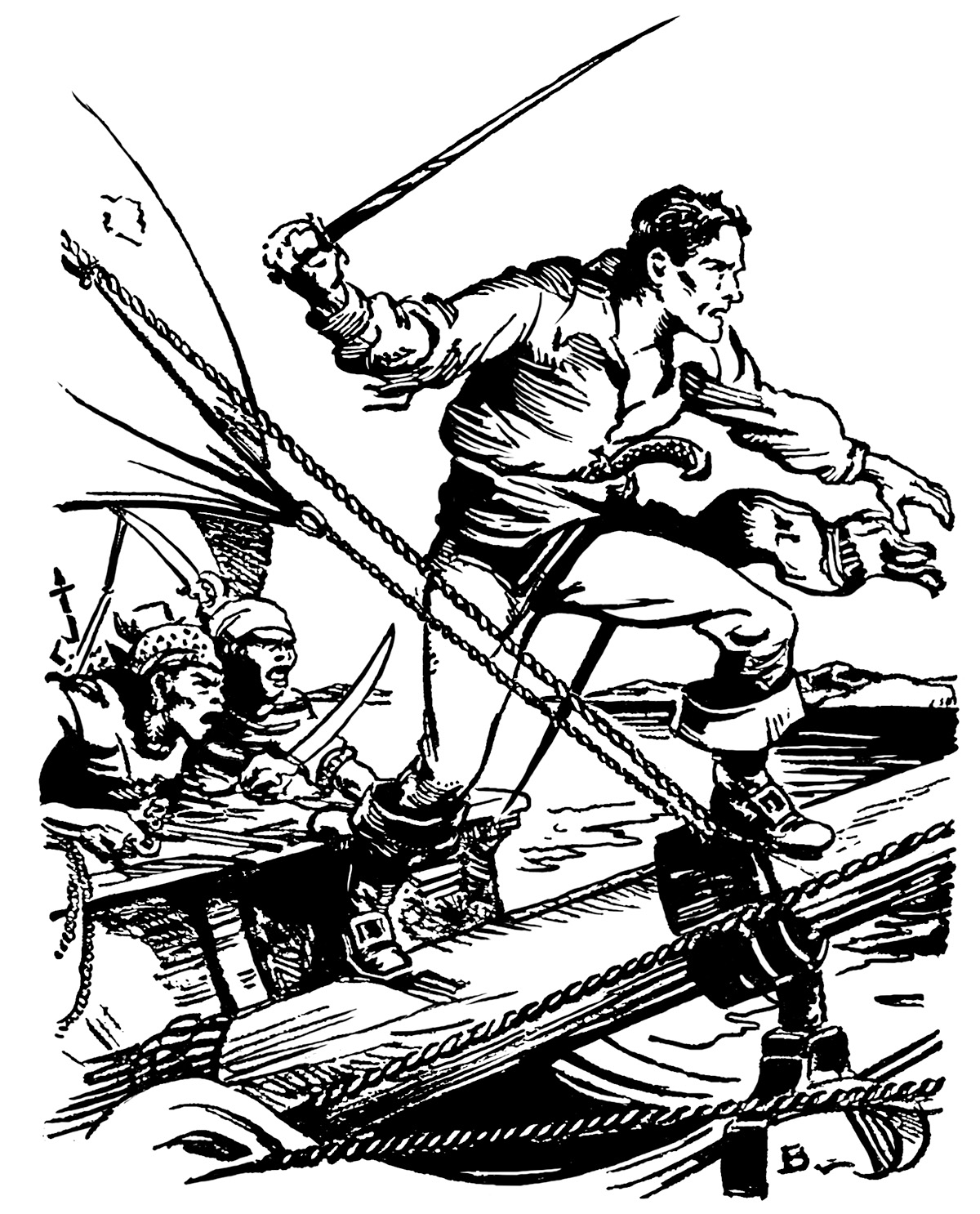
His hero, Tom Bristol, is press-ganged, lashed, and left for dead before he ever raises a flag, so when he frees the captives of a slave ship, he is not dispensing charity from a comfortable height. He knows the whip from the wrong end. Hubbard does not flinch from what Bristol finds in the hold: of three hundred souls shipped from Africa, fewer than a hundred and fifty are still alive, chained in a space too low to stand.
And then Hubbard does something a pulp writer in 1935 had no commercial reason to do. He gives that freed crew a face and a name. Among them is Amara, a Nubian who tells Bristol he was once a lieutenant, a galley veteran captured, sold, and sold again across the Mediterranean. Bristol does not treat him as rescued cargo. He makes him a shipmate: “You know ships, Amara. What you do not know I can teach you.” When Bristol speaks of “the men,” Amara gently corrects him, “Your men,” and begins to smile. Within a chapter he is arming the crew and leading a shore party as Bristol’s trusted right hand.
The line that gives the whole story its spine comes when a Danish trader tells Bristol to send “your slaves” over to shift some cargo:
“You mean my crew,” replied Bristol, an undercurrent of anger in his voice. “These men are free men, not slaves. I don’t happen to be of your stamp, gentlemen. When I take lives I use a rapier, not the whipping post and starvation, and yet I am a pirate, while you and your brothers are supposed to be civilized beings.”
Asked point-blank whether he truly considers them equals, Bristol does not blink: “More than a naval captain considers his men as equals.” In a handful of lines Hubbard flips the whole moral map. The “civilized” men are the ones holding the whip. The “pirate” is the one unlocking the shackles. Bristol’s freed shipmates sail on as crew, not cargo, and Hubbard even lets them dream of sailing home to Africa “with money enough to buy and sell their rulers.”
It is worth remembering when this was written—1935. It was a year of segregation and lynching in Hubbard’s own country, a moment when a pulp magazine writer had every commercial reason to reach for the usual ugly stereotypes. Hubbard reached the other way. He built his hero around free will, fair play, and equality, a theme he returned to again and again across his fiction. That was quietly radical on two clocks at once: unusual for the pirates of 1720, and unusual for the readers of 1935.
Freedom Under the Black Flag
Remember that black flag, the one that to a frightened crew meant mercy, a second chance? For the men of color who chose the pirate’s life, it delivered exactly that.
The Golden Age pirates have been gone three centuries, and history has mostly filed them under “monsters.” But look closely at that black flag and you find something the schoolbooks skip. For a while, on a few crowded decks, a man’s worth was measured by his skill and his nerve, not by the color of his skin or the papers that called him owned. Yesterday you might have been a slave. Today, under the black ensign, you might have been a shipmate.
Hubbard understood what freedom could mean beneath a pirate’s black flag, and he handed that understanding to his readers in 1935 without a word of sermon. You can sail with Tom Bristol yourself. Raise a glass. Maybe raise the flag.

Listen to an excerpt from the Under the Black Ensign audiobook:
Bibliography
Bialuschewski, A. (2011). Pirates, Black sailors, and seafaring slaves in the Anglo-American maritime world, 1716–1726. Journal of Caribbean History, 45(2).
Golden Age of Piracy. (n.d.). Pirates and slavery. https://goldenageofpiracy.org/culture/pirates-and-slavery
Hubbard, L. R. (1935). Under the Black Ensign. Five Novels Monthly. (Reprinted Hollywood, CA: Galaxy Press, 2008.)
Hubbard, L. R. (n.d.). Yesterday you might have been a pirate. Galaxy Press. https://galaxypress.com/yesterday-you-might-have-been-a-pirate/
Kinkor, K. J. (2001). Black men under the black flag. In C. R. Pennell (Ed.), Bandits at sea: A pirate reader. New York University Press.
National Maritime Museum. (n.d.). Pirate flags decoded. Royal Museums Greenwich. https://www.rmg.co.uk/stories/maritime-history/pirate-flags-decoded
Rediker, M. (2004). Villains of all nations: Atlantic pirates in the Golden Age. Beacon Press.
Rediker, M. (2014). Outlaws of the Atlantic: Sailors, pirates, and motley crews in the age of sail. Beacon Press.
Vallar, C. (n.d.). Black pirates. Pirates and Privateers: The History of Maritime Piracy. http://www.cindyvallar.com/blackpirates.html

Dr. Lee Carroll (AKA EL Whitehorse)
Working abroad in 10 countries of Europe, Asia, Africa, North and South America, both as a doctor and teacher, has shown me life through a prism of viewpoints. That experience has enriched my writing to the point where I enjoy showcasing the admiration I feel for varied cultures.
For example, my WOTF Semi-finalist entry is published for Kindle as Death Clearinghouse: The Novelette, featuring Apache ingenuity. Coming soon is my next sci-fi series Coko: An Android’s Heartfire Awakening.
When I’m not writing, I’m yanking swords out of stones around the world.
Amazon author page: https://www.amazon.com/stores/author/B07TRC1F4V/about
Other articles and resources you may be interested in:
Under the Black Ensign, book trailer: https://www.youtube.com/watch?v=waWDPZ6hU6o
Behind the story (2008 release): https://www.youtube.com/watch?v=LVijsVDVHhs
Short interviews on the story: https://www.youtube.com/watch?v=V21xF289UYs and https://www.youtube.com/watch?v=BRhSQIPqqkU

Leave a Reply
Want to join the discussion?Feel free to contribute!