
 ISBN: 978-1-59212-287-5
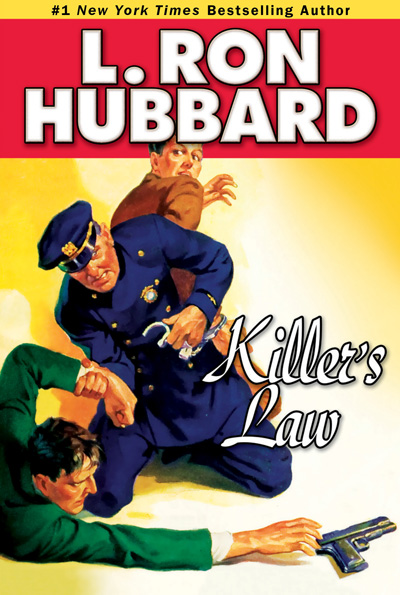
KIller’s Law
(also includes They Killed Him
Dead, The Mad Dog Murder,
The Blow Torch Murder)
Discussion Guide
Killer’s Law Story Summary & Overview
Sheriff Kyle of Deadeye, Nevada, travels to Washington, D.C., expecting little more than an unfamiliar visit to the nation’s capital. Instead, he finds himself accused of murdering a United States senator. With no memory of the crime, no convincing alibi and seemingly overwhelming evidence against him, Kyle must rely on his instincts, courage and determination to uncover a conspiracy before the real killers escape justice. The author blends Western grit with political intrigue in a fast-paced mystery filled with deception, danger and unexpected twists.
Historical Context: Congressional Investigations Before World War II
Killer’s Law centers on a fictional congressional investigation into the copper industry during the years leading up to World War II. During the 1930s, governments around the world closely examined industries connected to national defense, including companies that produced metals, fuel and military equipment. Questions about corporate influence, government oversight and wartime profits became increasingly important as international tensions grew.
Although the investigation in the story is fictional, it reflects genuine public concerns of the period about balancing private business interests with national security and government accountability.
Discussion Questions
- How does Sheriff Kyle’s experience as a Western lawman influence the way he responds after being accused of murder? Kyle approaches danger, authority and conflict differently from many of the people he encounters in Washington. Discuss how his background shapes the decisions he makes throughout the story.
- Why have governments throughout history investigated powerful industries, and why are those investigations often controversial? The senator’s inquiry into the copper industry reflects broader concerns about corporate influence and public accountability. If you can think of another similar historical investigation, compare it with the events of the story.
- Why does Sheriff Kyle choose to escape from police custody instead of relying on the legal system to prove his innocence? Kyle believes remaining in custody may prevent him from uncovering the truth. Evaluate the risks and possible alternatives available to him.
- Why do people sometimes become involved in criminal conspiracies even when they are not the principal offenders? Annie Molyneaux appears connected to the conspiracy for reasons that are not immediately clear. Discuss the different motivations that can lead people to participate in wrongdoing.
- How would modern forensic science have changed the investigation in Killer’s Law? The case depends largely upon witness testimony, physical evidence and personal investigation. Compare these methods with the technology available to investigators today.
- Should the morality of a person’s actions depend upon the outcome? Sheriff Kyle sometimes resorts to force and intimidation in his attempts to prove his innocence. Discuss whether the same actions would be judged differently if committed by someone who was actually guilty.
- How do newspapers and public opinion influence the investigation? Public opinion quickly turns against Kyle after newspapers identify him as the likely murderer. Compare this with the influence of modern news organizations and social media on criminal investigations.
- Which theme stands out most strongly in Killer’s Law: justice, courage, corruption, perseverance or another idea? By the conclusion of the story, Kyle has exposed the true
criminals while clearing his own name. Evaluate which central message the author develops most effectively.
They Killed Him Dead
Discussion Guide
They Killed Him Dead Story Summary & Overview
Homicide detective “Careful” Cassidy is famous for solving murders quickly and confidently, but this case refuses to cooperate. As the investigation unfolds, Cassidy arrests one suspect after another, only to discover that each person appears to have committed the same murder for entirely different reasons. With every new confession, the mystery becomes more complicated instead of less. The author combines classic detective fiction with sharp humor and surprising twists in a story that reminds readers never to trust first impressions.
Chapter One: Too Many Obvious Suspects
How does Cassidy’s confidence help him as a detective, and when might it become a weakness? Cassidy has earned a reputation for solving difficult cases quickly. Discuss how confidence can improve decision-making while also creating the risk of overlooking important evidence.
Why is relying on first impressions often dangerous during an investigation? Cassidy initially believes the evidence clearly identifies the guilty party. Discuss why investigators must continue examining evidence even when a case appears straightforward.
Chapter Two: Every Answer Creates Another Question
What does Cassidy’s willingness to abandon his original theory reveal about his professionalism? Rather than defending an incorrect conclusion, Cassidy adjusts his thinking as new evidence emerges. Discuss why persistence and flexibility are both important qualities for investigators.
How did police investigations during the early twentieth century differ from modern criminal investigations? The story emphasizes interviews, observation and logical reasoning rather than advanced forensic technology. Compare these methods with those available to investigators today.
What information would you need before deciding whether the restaurant owner’s claim of self-defense was justified? The owner explains that he acted because he believed he was protecting himself. Discuss what additional evidence investigators would need before reaching a fair conclusion.
Chapter Three: Solving the Impossible Case
How does Cassidy respond each time new evidence proves one of his theories incorrect? Instead of becoming discouraged, Cassidy continues searching for the truth despite repeated setbacks. Examine what this reveals about his character and approach to detective work.
Why do several characters conceal information or move the body instead of immediately contacting the police? Fear of blame, embarrassment or legal consequences influences many of the decisions made after the victim’s death. Discuss how honesty might have changed the outcome for everyone involved.
Why do misunderstandings sometimes cause innocent people to believe they are responsible for something they did not actually do? Throughout the investigation, several individuals mistakenly believed they caused the victim’s death. Discuss how confusion and incomplete information can lead people to false conclusions.
Do you think that the author balanced comedy well in the murder mystery? If so explain how. Although the story involves serious events, many situations are presented with humor. Discuss whether the comedy strengthens the mystery by making the characters and situations more memorable.
The Mad Dog Murder
Discussion Guide
The Mad Dog Murder Story Summary & Overview
Officer Tommy Farrell expects nothing more than tracking down a dangerous dog on a cold winter day. Instead, what appears to be a routine assignment quickly turns into a murder investigation involving greed, deception and carefully hidden motives. Determined to prove himself worthy of joining the homicide squad, Farrell refuses to overlook suspicious details that others dismiss. The author combines classic detective fiction with humor and clever investigative techniques in a story where appearances repeatedly conceal the truth.
Historical Context: Rabies and Public Health
Before widespread vaccination and modern public health programs, rabies was one of the most feared diseases in the United States. Because the disease was almost always fatal once symptoms appeared, reports of suspected rabid animals often caused widespread public alarm. Communities responded quickly to protect people from potential exposure, making investigations into suspected rabies cases especially urgent.
The author uses this historical fear as the starting point for a fictional mystery in which concern over a dangerous dog hides a much more complicated crime.
Discussion Questions
- Why are curiosity and healthy skepticism valuable qualities for an investigator? Tommy Farrell dreams of joining the homicide squad and notices details that others overlook. Discuss when questioning assumptions can lead to important discoveries and when it can become a disadvantage.
- When is it appropriate to challenge authority, and what responsibilities come with doing so? Farrell continues pursuing his own theory even when others disagree. Discuss how independent thinking can both strengthen and complicate an investigation.
- How did fear of rabies influence public health decisions during the early twentieth century? Rabies plays a central role in the mystery because of the fear it inspired before modern vaccination programs. How is the disease transmitted, prevented and treated today? Compare that knowledge with the story’s historical setting.
- Why is motive alone never enough to prove someone committed a crime? June Beach quickly becomes a suspect because she appears to benefit financially from the victim’s death. Discuss why investigators must support theories with evidence rather than assumptions.
- How do Tommy Farrell’s investigative methods compare with those used by modern detectives? Farrell relies primarily on observation, interviews and logical reasoning. Compare these techniques with today’s use of forensic science and digital evidence.
- Is deception ever justified during a criminal investigation? Farrell uses an unusual fake lie detector to provoke a reaction from a suspect. Discuss whether investigators should ever use deception while seeking the truth and whether ethical limits should exist.
- Which advances in forensic science might have helped solve this case more quickly? The author wrote the story during a period when forensic techniques were rapidly developing. Do you know of one important forensic innovation from the early twentieth century? If so, explain how it could have influenced this story.
- Why do people sometimes misjudge situations because of appearances? Many characters quickly assume Toto is a dangerous, rabid dog without fully understanding the situation. Discuss why first impressions can be misleading and how careful investigation helps prevent mistakes.
- How does greed influence the decisions made throughout the story? Financial motives play an important role in the mystery. Discuss how the desire for wealth can influence otherwise respectable people to make harmful choices.
- What does Tommy Farrell’s success suggest about persistence and independent thinking? Farrell earns his place on the homicide squad because he refuses to abandon what initially appears to be a simple case. Evaluate which lesson from the story remains most relevant today.
The Blow Torch Murder
Discussion Guide
The Blow Torch Murder Story Summary & Overview
When several known criminals voluntarily ask to be arrested for minor offenses, veteran detective Ham Logan immediately senses that something is wrong. His suspicions deepen after a murder victim is discovered who appears to have been killed with a blow torch. As the investigation unfolds, Logan relies on patience, careful observation and unconventional thinking to expose a crime in which nearly everything is the opposite of what it first appears. The author delivers a clever detective mystery built on misdirection, logic and surprising revelations.
Discussion Questions
- Why do several known criminals voluntarily ask to be arrested for minor offenses, and what early clues suggest these events are connected? The unusual behavior immediately attracts Ham Logan’s attention because it does not fit normal criminal patterns. Discuss why investigators should pay special attention to events that seem out of place.
- How does Ham Logan’s relaxed and sleepy appearance become an advantage during the investigation? Other characters underestimate Logan because of his calm manner. Discuss how allowing others to underestimate you can sometimes become a strategic advantage.
- Why do investigators initially believe the victim was killed with a blow torch, and what evidence eventually challenges that conclusion? The case appears straightforward until careful examination begins revealing contradictions. Trace how the evidence gradually changes the direction of the investigation.
- How does Ham Logan solve the case through observation and logical reasoning rather than scientific testing alone? Although physical evidence is important, Logan succeeds by noticing details others overlook. Discuss how careful thinking is valuable in solving problems well beyond criminal investigations.
- Why is the idea of opposites central to solving the mystery? The story repeatedly encourages readers to question what appears obvious. Examine how recognizing opposites helps Logan uncover the truth.
- Were Ham Logan’s unusual investigative methods justified? Logan often approaches the case differently from other detectives. Evaluate whether his unconventional methods were appropriate and whether they ultimately served the cause of justice.