
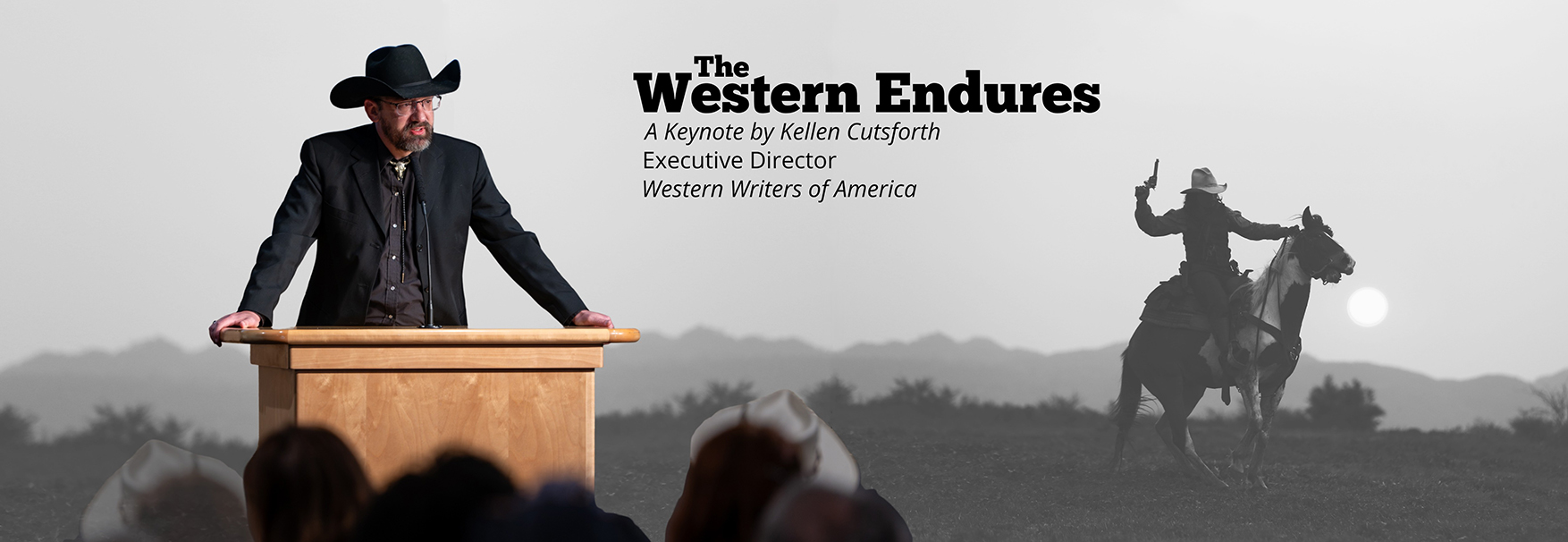
The Western Endures: Why America’s Frontier Stories Still Matter
Guest blogger Kellen Cutsforth, Executive Director, Western Writers of America
Editor’s Note: Author Services, Inc. and Galaxy Press were honored to welcome Kellen Cutsforth, Executive Director of Western Writers of America, as the keynote speaker at “90 Years on the Trail”—an event celebrating the 90th anniversary of L. Ron Hubbard’s first published Western story, The Baron of Coyote River. The following article is adapted from his address.
When I met the good folks of Galaxy Press at the Western Writers of America Convention in St. Louis, I knew almost immediately that I had met cowpunchers who were square dealers. In the West, a person’s word still means something. So when I was asked to speak in celebration of the 90th anniversary of L. Ron Hubbard’s very first Western story, The Baron of Coyote River, there was simply no way I could turn down the opportunity.
As Executive Director of Western Writers of America, it is my privilege to help guide one of our nation’s oldest literary organizations into the future—a future made possible because of writers like Hubbard who devoted themselves to telling stories of the American West.
Preserving the Stories of the American Frontier
Western Writers of America was established in 1953 by a group of hard-drinking, chain-smoking, “good ole boys” who shared one simple goal: to preserve and promote Western literature. They believed the stories of the frontier mattered and that the men and women who wrote them deserved an organization that would encourage excellence.
That mission hasn’t changed. Today, through our annual Spur Awards—the highest honor in Western writing—we recognize excellence across novels, poetry, songs, screenplays, juvenile literature, historical nonfiction, and biographies.
Literature is a conversation across generations. Every great writer borrows from those who came before, adds something uniquely his or her own, and passes the tradition to those who follow.
Every great writer borrows from those who came before, adds something uniquely his or her own, and passes the tradition to those who follow.
Generations of storytellers have built this shared heritage—from icons like Mark Twain, Louis L’Amour, Mari Sandoz, John Wayne, N. Scott Momaday, Elmore Leonard, Tony Hillerman, and Elmer Kelton to modern authors carrying the torch today like Anne Hillerman, Craig Johnson, C. J. Box, and Johnny Boggs.
Several of those historic authors were contemporaries of L. Ron Hubbard. They understood that the West was more than scenery—it was a place where character was tested, difficult choices carried real consequences, and ordinary people performed extraordinary acts.
America’s Unique Contribution to World Literature
Throughout history, nearly every civilization has contributed something unique to the world’s literary heritage:
- England gave us Shakespeare and the detective novel.
- France gave us romantic adventure.
- Ancient Greece gave us epic poetry and mythology.
- Russia gave us sweeping philosophical novels.
But America gave the world the Western.
As settlers crossed the Appalachians and Great Plains, they forged an entirely new identity. Our clothing, language, food, and music changed—and so did our stories. The frontier demanded self-reliance, hard work, resourcefulness, and courage. One’s reputation rested on honesty and reliability. Those values naturally found their way into our literature.
From Dime Novels to the Pulp Era
The Western first exploded in popularity through 19th-century dime novels and nickel weeklies, turning figures like William F. “Buffalo Bill” Cody into America’s first living superheroes.
Among the readers captivated by those stories was a young Ohio dentist named Pearl Zane Grey. In 1912, Grey published Riders of the Purple Sage, combining sweeping landscapes, romance, and moral conflict into the template for the modern Western.
By the 1930s, pulp magazines had become America’s entertainment powerhouse. For just a few cents, readers could dive into magazines overflowing with adventure, mystery, aviation tales, detective stories, and Westerns.
L. Ron Hubbard and the Golden Age of Pulp
Few authors took greater advantage of the pulp era than L. Ron Hubbard. Remarkably prolific, Hubbard wrote across numerous genres—adventure, mystery, science fiction, fantasy, sea stories, aviation, detective fiction, and Westerns all flowed from his typewriter.
With an action-heavy style, rich language, and vibrant character development, Hubbard had a clear knack for frontier storytelling.
The Baron of Coyote River (1936)
Published in All Western magazine in 1936, Hubbard’s debut Western demonstrated that he instinctively understood the rhythms of the genre:
- Decisive Heroes: Driven by clear motives and courage.
- Formidable Villains: Presenting genuine, high-stakes challenges.
- Living Landscapes: Setting the scene as an active force in the story.
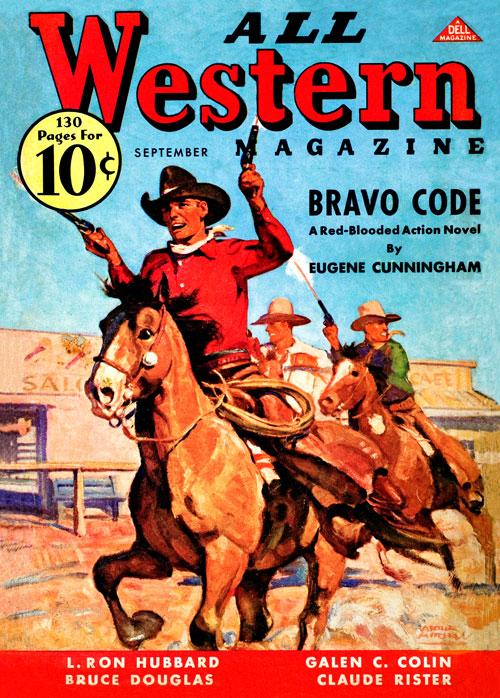
The Baron of Coyote River, published in 1936 in All Western Magazine
Buckskin Brigades
Hubbard’s first hardcover novel, Buckskin Brigades, remains particularly noteworthy. Long before such portrayals became common in popular fiction, Hubbard depicted Native Americans as fully realized human beings with their own rich cultures and perspectives—challenging the conventions of the era. Good writers challenge conventions instead of merely repeating them.
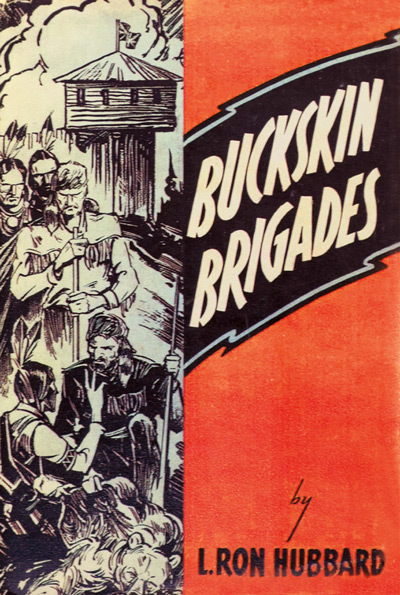
Buckskin Brigades, 1937 hardcover
The Frontier Continues: Why the Western Will Always Endure
Over the past several decades, literary critics have repeatedly declared the Western dead: “The audience is gone,” “Nobody reads Westerns anymore,” “The frontier is irrelevant.”
Yet ninety years after Hubbard’s first Western story was published, the evidence around us tells a completely different story. Today’s readers continue buying Western novels, new authors enter the field daily, and Hollywood continues to revisit the genre with hit shows like Dark Winds, American Primeval, and Landman.
As long as readers continue turning pages, as long as writers find inspiration beneath big skies, and as long as people believe that courage, honor, perseverance, and hope matter—the Western will endure.
The Western has never truly disappeared—it has simply evolved. Like the riders who disappear into the sunset only to return in another story, the Western keeps riding on.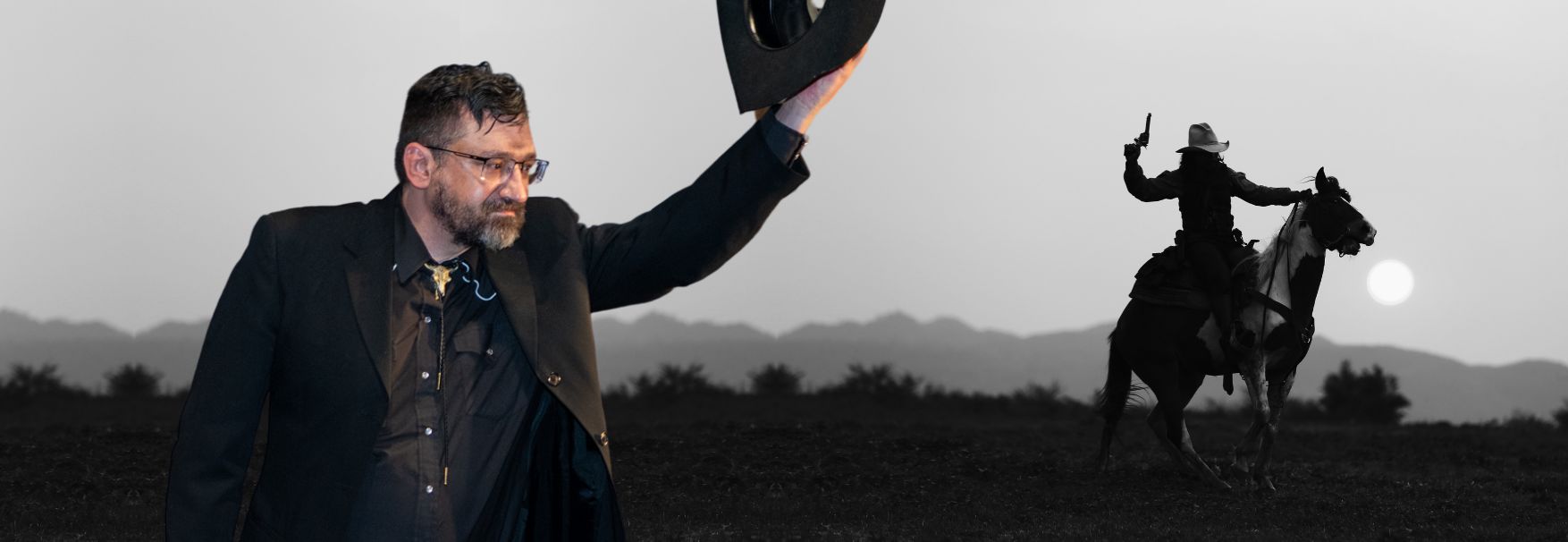
If you would like to see the full speech, you can watch it here.


Leave a Reply
Want to join the discussion?Feel free to contribute!